What is Vibe Coding?
Vibe Coding is a new programming method that emerged in 2025, allowing users to create applications and games by simply expressing their ideas in natural language. This concept was popularized by OpenAI co-founder Andrej Karpathy, who described it as a way to embrace creativity without getting bogged down by traditional coding syntax.
Understanding Vibe Coding in One Sentence
Vibe Coding = Describe your needs in natural language, and let AI write the code for you.
Why is it Called “Vibe”?
The term “Vibe” captures the essence of this programming style:
- No need to worry about code details.
- Immerse yourself in the realization of your ideas.
- Experience a collaborative synergy with AI.
Vibe Coding vs Traditional Programming
| Dimension | Traditional Programming | Vibe Coding |
|---|---|---|
| Core Work | Writing code line by line, debugging syntax | Describing needs, viewing results, requesting modifications |
| Entry Barrier | Requires systematic learning of programming languages | Can start with just natural language |
| Development Cycle | Days/Weeks | Hours/Days |
| Role of Programmer | Code implementer | Product manager + Architect + Quality inspector |
| Typical Scenarios | Enterprise-level system development | Rapid prototyping, personal projects, MVPs |
For example, creating a simple accounting app used to require learning Python and front-end development. Now, with Vibe Coding, you can simply tell the AI, “Help me create an accounting app that tracks income and expenses with a clean interface,” and it can generate a working program in a few hours.
How Did Vibe Coding Become Popular?
The concept gained traction in early 2025 when Karpathy tweeted about his new habit of using AI for coding. This tweet quickly went viral among programmers. Key events that accelerated its popularity include:
- March 2025: Y Combinator revealed that 25% of its startups had 95% of their code generated by AI.
- May 2025: Google CEO announced that over 25% of new code at the company was AI-generated.
- November 2025: Collins Dictionary named “vibe coding” the word of the year.
What Can Ordinary People Do with Vibe Coding?
Case 1: College Student Earning 90,000 a Month
A junior student, Dongfang Qing, made up to 90,000 yuan a month by using AI programming tools like Cursor and Claude to sell shared accounts and provide technical consulting.
Case 2: 280,000 in 3 Hours
Independent developer levelsio created a 3D flight game, “Fly Pieter,” in just 3 hours using Cursor and Grok-3, earning $17,360 in its first week through virtual ad sales.
Case 3: Retired Humanities Graduate Finds New Joy
A retired humanities major, Xiao K, used Vibe Coding to create a personalized accounting app in just one day using natural language.
Case 4: Second Grader Creates a Game
A parent shared that their second-grade child made a game called “Cat Paw Mouse” using Vibe Coding, something unimaginable in the past.
Common Tools for Vibe Coding
To get started with Vibe Coding, choose one of the following tools:
| Tool | Features | Suitable For |
|---|---|---|
| Cursor | AI-native editor, conversational development, currently the most popular | Those who want to seriously learn Vibe Coding |
| Windsurf | Free, runs locally, cross-platform | Beginners who don’t want to spend money |
| ChatGPT / Claude | Direct web interaction, no installation needed | Those who just want to try quickly |
| Trae | Developed by ByteDance, free | Users accustomed to domestic tools |
| Replit | Online IDE, no environment setup required | Those who don’t want to deal with installations |
Starting with Cursor is recommended due to its excellent reputation and rich community resources, along with a free tier.
How to Get Started? 6-Step Guide
Step 1: Clarify what you want to create. It can be a simple tool like a timer or a flashcard app.
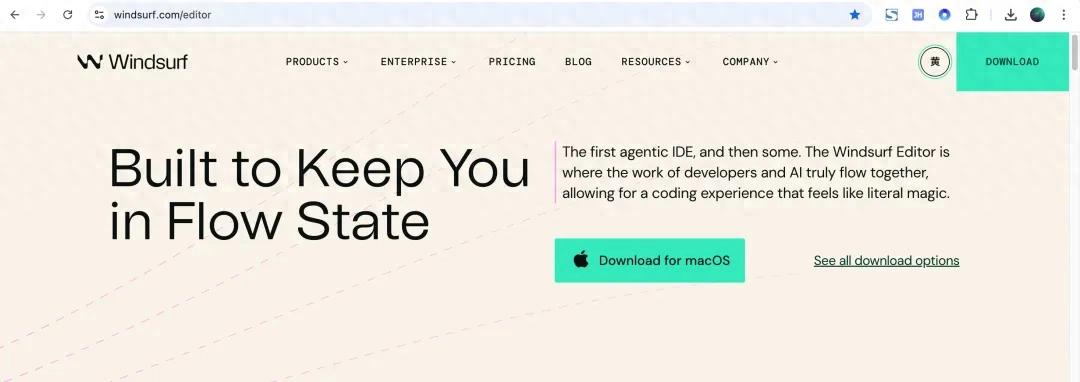
Step 2: Install a tool. For example, download Windsurf from its official website (https://windsurf.com/editor) and create a new project folder.
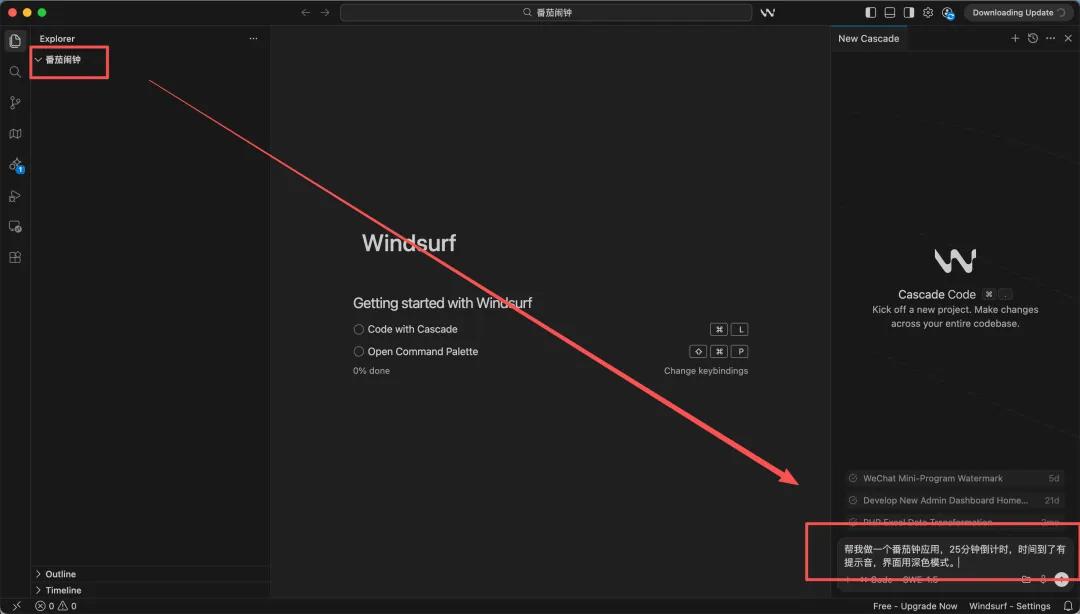
Step 3: Describe your needs in natural language in the AI dialogue box of Cursor:
“Help me create a Pomodoro timer app with a 25-minute countdown, a sound alert when time is up, and a dark mode interface.”
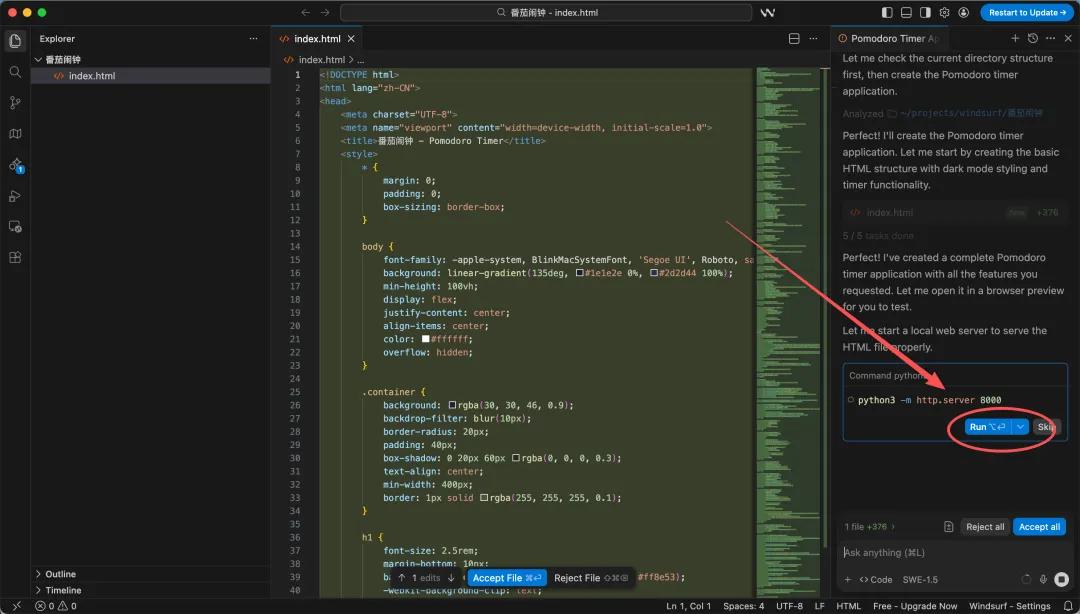
Step 4: Run and check the results. The AI will generate the code, and you can click the “Run” button to see the effect.
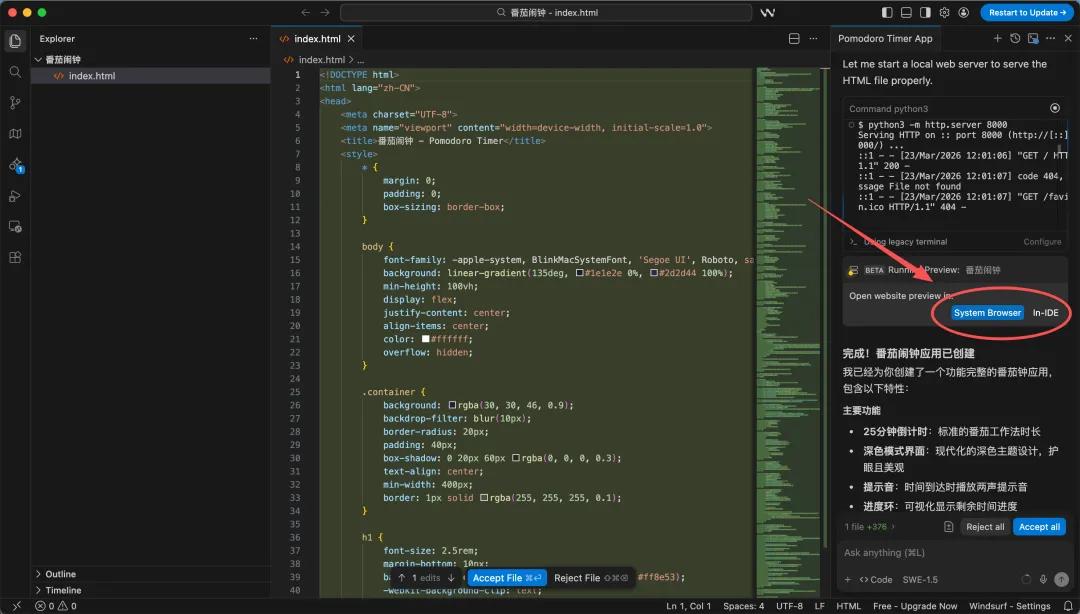
After successfully running it, click “System Browser” to open it in your default browser.
The final running effect is as follows:
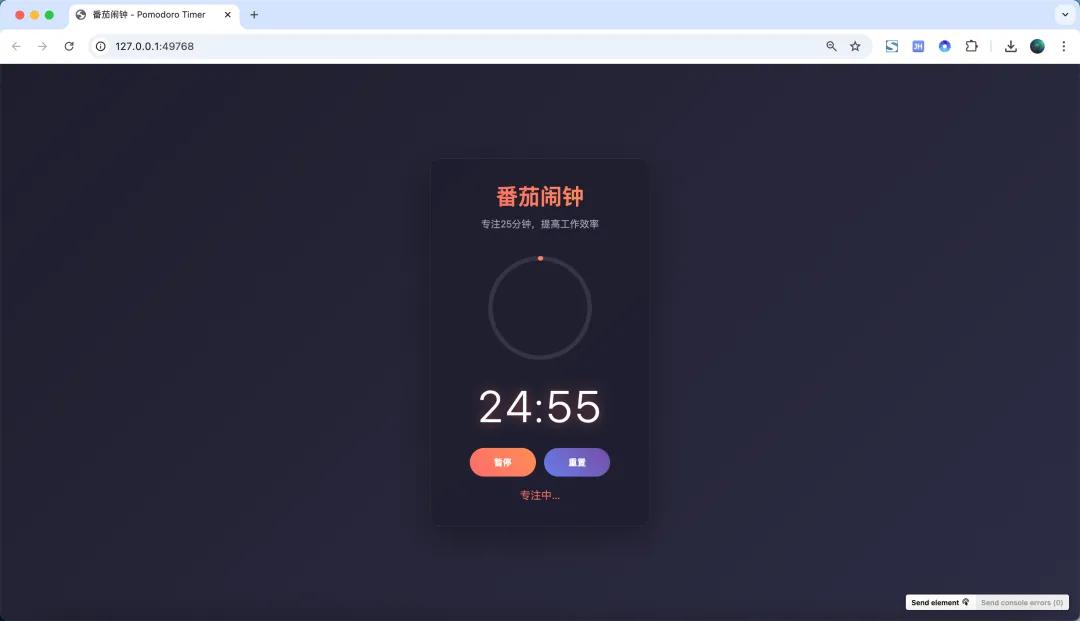
Step 5: Continue to provide modification suggestions if you’re not satisfied. For example, “Make the button larger,” “Change the countdown numbers to red,” or “Add a pause function.”
Step 6: Repeat until satisfied. This is the core loop of Vibe Coding: Describe needs → View results → Adjust again. Focus on the results rather than the code itself.
How Vibe Coding is Changing the Landscape
-
Lowering the Barrier to Programming: Previously, programming was a skill for a select few. Now, Vibe Coding makes it accessible to everyone.
-
Changing the Role of Developers: The future programmer is no longer just a code writer but also a product manager, architect, and quality controller.
-
Reducing Startup Costs: Experiments by YC CEO Garry Tan showed that it’s possible to produce 600,000 lines of code in 60 days using Vibe Coding, highlighting how it transforms the concept of a one-person company into reality.
Cautions to Consider
Vibe Coding is not magic; it has limitations:
-
AI Can Make Mistakes: AI-generated code may contain bugs, security vulnerabilities, or logical errors. Do not trust AI unconditionally; always test and review.
-
Basic Coding Knowledge is Necessary: While you don’t need to write code, you should at least be able to read it to verify the AI’s output.
-
Complex Projects Require Expertise: Simple prototypes can be created with Vibe Coding, but larger systems with high concurrency and security requirements still need professional engineers.
-
Risk of Homogenization: Many one-person companies use the same tool stack, leading to product homogenization. True competitive advantage comes from creativity, taste, and understanding of users.
Conclusion: Is Vibe Coding the Future?
Vibe Coding does not aim to replace traditional programming but opens a new path. It enables:
- Non-programmers to turn their ideas into reality.
- Professional developers to validate ideas faster and focus on more valuable work.
- Entrepreneurs to experiment quickly and at low cost.
As one developer put it, “Vibe Coding brings programming back to the essence of problem-solving, away from syntax games.”
If you have an idea, you no longer need to say, “Unfortunately, I can’t code.” Now, you can say, “Let me try using Vibe Coding.”
Comments
Discussion is powered by Giscus (GitHub Discussions). Add
repo,repoID,category, andcategoryIDunder[params.comments.giscus]inhugo.tomlusing the values from the Giscus setup tool.