The Art of Vibe Coding: When Feelings Become Technical Instructions
A wave of technological advancement often begins with a groundbreaking paper, a revolutionary product, or a massive investment. However, “Vibe Coding” is an exception. This concept was introduced by the well-known tech figure Andrej Karpathy, but its iconic representation is not a tech leader but rather a viral meme featuring the legendary music producer Rick Rubin.
Rick Rubin, known for his work in punk, rock, and hip-hop, became connected to the coding world through a widely shared image of him deep in thought, seemingly engaged in a mystical interaction with machines. This image was labeled “Vibe Coding,” initially perhaps as a joke, but it unexpectedly sparked a profound discussion about creativity, human-computer interaction, and the philosophy of technology. Rubin embraced this label and collaborated with Anthropic to release an interactive work titled “The Way of Code,” claiming its inspiration came from the ancient text, the Tao Te Ching.
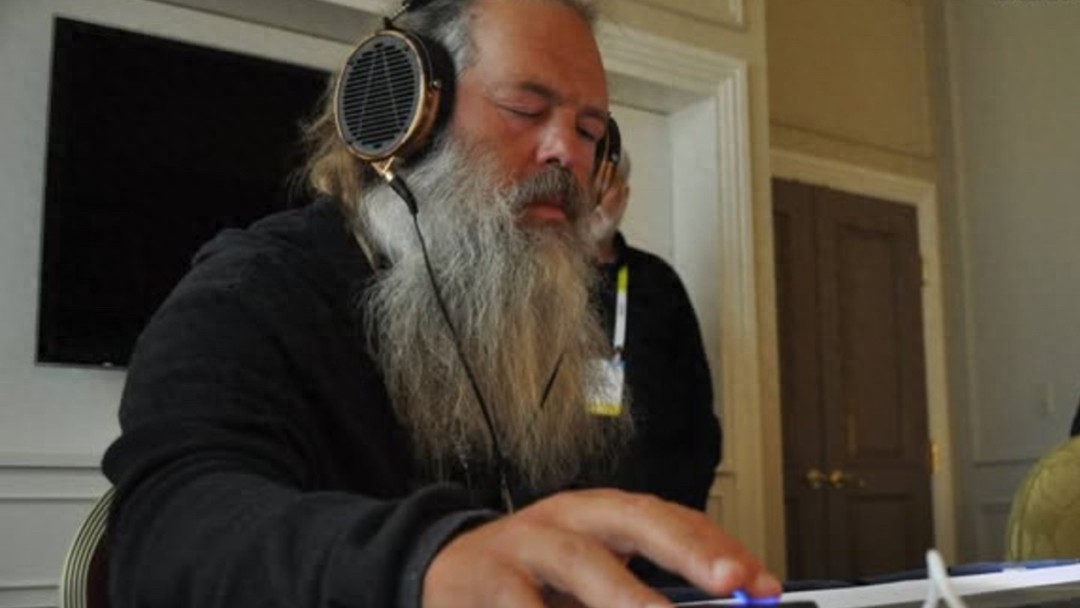
In a sense, this entire process is filled with “vibe.” It did not enter the public consciousness through rational technical arguments or commercial promotions but rather as a cultural phenomenon that defies reason. This compels us to reconsider what we are truly discussing when we talk about Vibe Coding. Is it really just about coding?

From Punk Rock to “Code Punk”
In a16z’s podcast, Rick Rubin provided a highly personal definition: “Vibe coding is the punk rock of software.” This metaphor accurately captures the core spirit of this movement.
The birth of punk rock in the 1970s was a rebellion against the lengthy and overly arranged mainstream rock music of the time. You did not need to be a skilled guitar hero or spend years honing your craft in a music academy; with just three chords and a passion or a point to express, anyone could form a band and take the stage. Punk rock significantly lowered the barrier for music creation, allowing countless ordinary youths to express themselves, thus unleashing tremendous creativity.
Vibe Coding plays a similar role today. For a long time, software development has been seen as a skill requiring deep technical knowledge and rigorous logical training, with complex lines of code forming a barrier that ordinary people find hard to cross. AI tools, represented by large language models, are becoming the new “three chords.” A designer can quickly turn a user interface idea into an interactive prototype; a writer can adapt a story into a simple text adventure game; a scientist can handle complex data without being proficient in Python programming. Previously, bringing these ideas from conception to realization required a long learning curve or expensive external collaboration.
Now, they only need to describe their “vibe”—that vague, intuitive feeling of “what I want”—to the AI. The AI acts as a patient and versatile assistant, translating this feeling into code and presenting immediate results. The focus of this process is no longer on the technical details of “how to implement” but rather on the creative essence of “what to want.” This is the democratization of creativity: tools are no longer authoritative; ideas are.
Rubin emphasizes in the podcast that the emergence of AI allows “non-programmers” to finally play in the “sandbox” that was previously blocked by technical barriers. “You don’t need to learn to code anymore.” This statement may be somewhat exaggerated, but it accurately describes a trend: the technicality of technology is gradually being hidden behind smooth natural language interactions, freeing human creativity from cumbersome implementation processes.
As Rubin wisely asserts: “Tools will come, tools will go, only the vibe coder remains.” Here, the “Vibe Coder” does not refer to a specific profession but to a new identity of creator. Their core ability is no longer mastering the syntax of a particular tool but possessing unique taste, clear intent, and effective communication with AI.

Intuition, Taste, and the “Unreasonable”
If Vibe Coding were merely about lowering barriers, it would be nothing more than a tool iteration. Its depth lies in forcing us to consider: when AI can handle most of the logical implementation work, where does human value lie?
Rubin’s answer is that AI is a tool, not an artist. He compares AI to guitars, samplers, or a woodworking shop. “The AI doesn’t have a point of view.” Its viewpoint is what you give it. You can provide the same script to five different directors and receive five distinct films. Similarly, you can give the same vague idea of “vibe” to AI, and through various questions, guidance, and corrections, you will ultimately receive vastly different results. This guidance and correction process is the core manifestation of human value.
This process relies on two things: taste and intuition. Taste determines direction, while intuition makes choices among countless possibilities. This aligns interestingly with the ongoing discussion about RLHF (Reinforcement Learning from Human Feedback) in AI development. The intention of RLHF is to make AI’s behavior more aligned with human preferences and values, but in practice, it may lead AI to become “smooth” and “boring.” The “human feedback” it learns often comes from a limited, similarly backgrounded group of developers or annotators. As a16z co-founder Marc Andreessen noted, this could lead AI to merely reflect the worldview of “7% of extreme progressives in America” rather than a more diverse and authentic world.
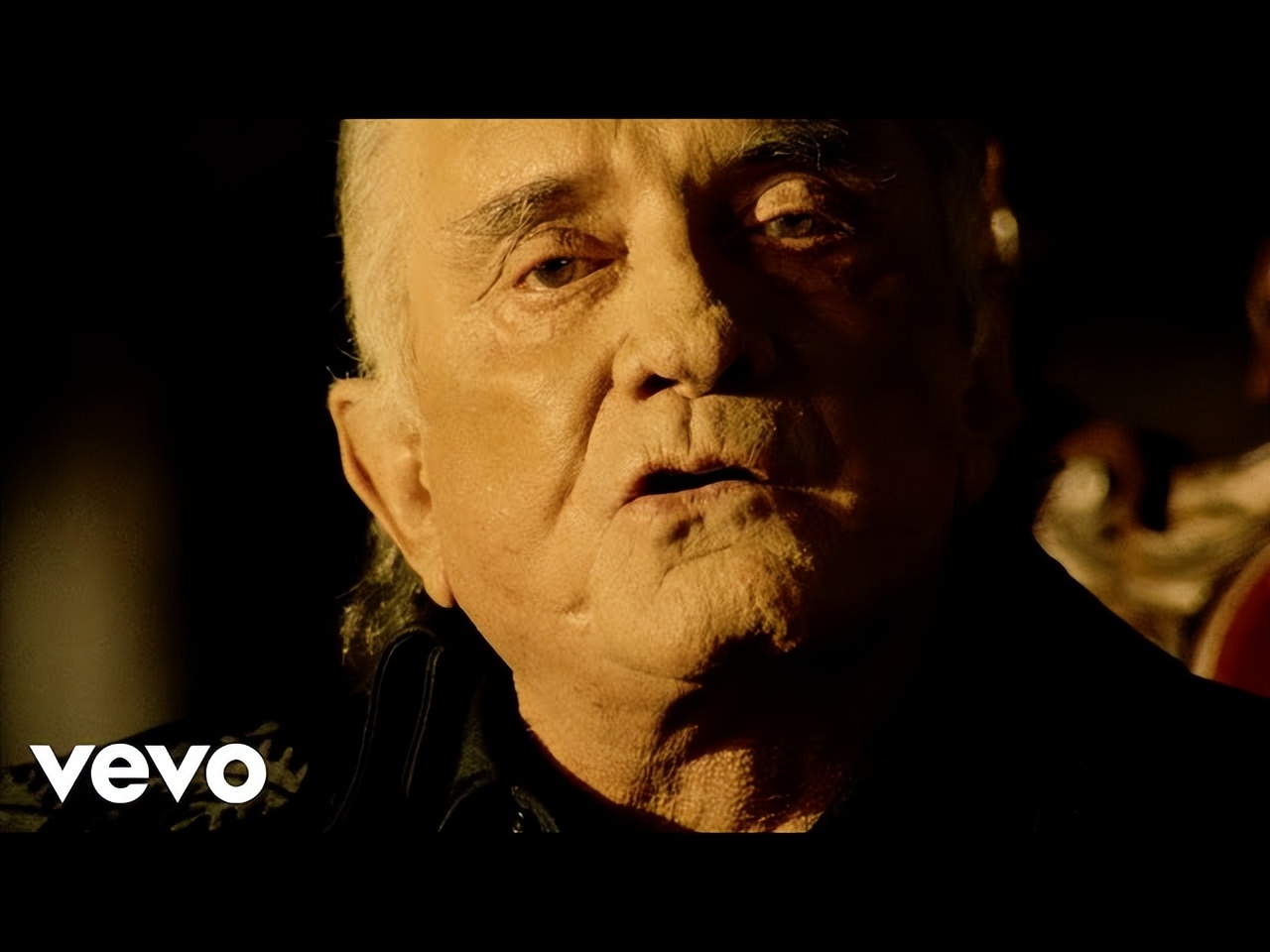
Rubin’s perspective is more radical and fundamental. He believes that human breakthroughs often stem from “unreasonable” moments. AI is a product of logic; it can find optimal solutions within existing rules and data, but it cannot, like the Wright brothers, create an airplane simply because of a belief in “flight” when everyone else thinks it impossible. It cannot comprehend why Johnny Cash’s raw, unrefined recording with a broken wooden guitar at the end of his life resonates more than a polished version produced in a top studio.
That intuition and persistence, rooted in life experience and often unquantifiable or somewhat “illogical,” is the last bastion of human creativity. The true art of Vibe Coding lies not in crafting perfect prompts but in using one’s unique taste and “unreasonable” intuition to “mess with” AI. Letting AI attempt things it typically wouldn’t do, challenging seemingly “correct” mediocre answers, and discovering new aesthetics and possibilities from AI’s “mistakes” or unexpected results.
This requires the “Vibe Coder” to possess high self-awareness and aesthetic stability. When AI generates ten options for you, you need to know which one is closest to that vague “vibe” deep within you, and which one, although looking the safest and most trendy, strays from your original intent. In this sense, the process of Vibe Coding transforms into a dialogue between the creator and the self, with AI merely reflecting the inner thoughts.

Why Rick Rubin?
Returning to the initial question, why did Rick Rubin, a music producer, become the spokesperson for this technological movement? The underlying logic reflects the transformation of contemporary technological culture dissemination. The key lies in understanding the power of memes: they are a form of consensus with very low explanatory costs. An image of Rick Rubin “doing his thing” conveys the core idea of Vibe Coding—it relates to intuition, inspiration, and a certain aura that transcends code—more intuitively and powerfully than any technical white paper or product launch. This image quickly established a broad cultural consensus, leading to significant “value overflow.”
This overflow is first reflected in the tremendous promotion of AI tools and the expansion of imaginative boundaries. It encourages countless individuals who previously thought they were insulated from programming to start experimenting with AI for creation, resulting in a plethora of novel applications and works. Secondly, it has changed the narrative in the tech industry. In the past, we were accustomed to measuring technological progress with performance metrics (like model parameters and speed scores). The popularity of Vibe Coding has shifted focus toward the “experience” and “philosophy” of technology. A cultural discussion on “how to create better” is far more profound than a technical competition over “whose computing power is stronger.”
Rick Rubin’s identity plays a crucial role here. If a different tech mogul were the spokesperson for Vibe Coding, the concept might be interpreted as yet another self-mythologizing by the tech elite. However, because of Rubin’s “outsider” status, his advocacy for “democratizing creativity” feels particularly sincere and credible. He is a living example that you do not need to understand code; as long as you have strong creativity and taste, you can still make waves in this new era. He embodies a shaman from the pre-digital age, infusing ancient wisdom (the Tao Te Ching) with spirituality and meaning in the latest technology (AI).
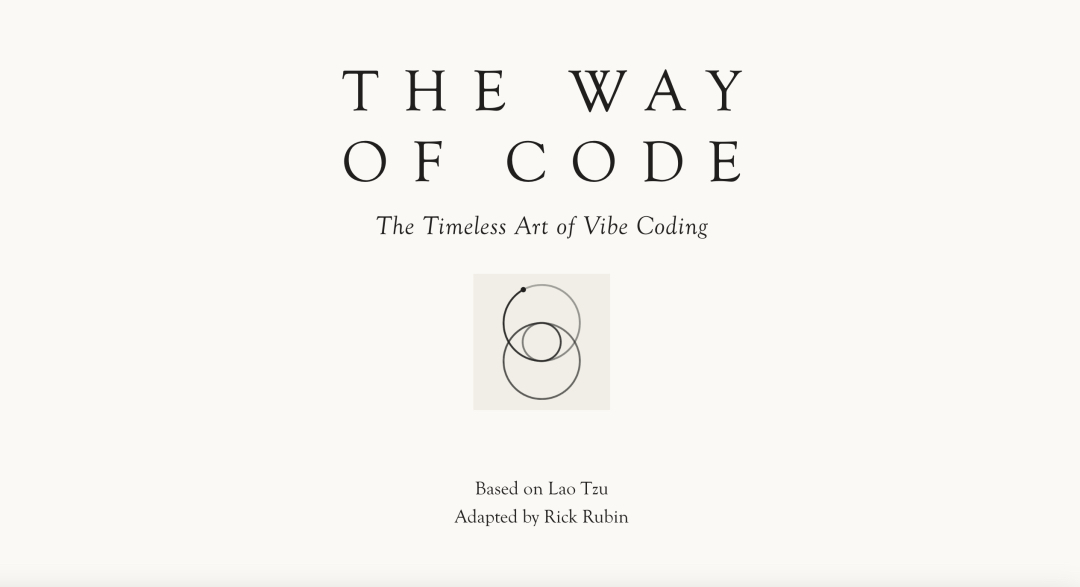
This phenomenon, where cultural symbols lead technological trends, has been rare in Silicon Valley. It indicates that when technology becomes powerful enough to permeate the social fabric, its development direction is no longer solely determined by engineers and scientists; culture, art, and philosophy will play increasingly important roles. People may choose a product not just for its functionality but also for the lifestyle or identity it represents.

“Serve Yourself”
At the end of the podcast, when asked how to balance personal vision with market demand, Rubin offered a seemingly simple yet profound answer: “You’re serving people like you. You’re the audience. You’re making your favorite thing.”
This may be the ultimate principle of Vibe Coding. It is not a technique to cater to the external world but a journey of inward exploration. You are not guessing what “users” or the “market” want; instead, you are using AI as a powerful tool to faithfully present your taste, realize your ideas, and please yourself, the most discerning audience. When you can create something that excites you, you will naturally attract those who resonate with you.
From this perspective, Vibe Coding is indeed not just about coding. It reminds us that no matter how tools evolve, the ultimate source of creativity will always be that unique, intuitive, and somewhat “unreasonable” universe within us. AI makes it more possible than ever to clearly transform that inner universe into reality.
Comments
Discussion is powered by Giscus (GitHub Discussions). Add
repo,repoID,category, andcategoryIDunder[params.comments.giscus]inhugo.tomlusing the values from the Giscus setup tool.