Introduction
Since its release on November 30, 2022, ChatGPT has quickly become a global phenomenon, achieving the fastest user growth of any application in history. However, with the strong emergence of Google’s Gemini 3 series, OpenAI is facing unprecedented competitive pressure, even declaring a ‘Code Red’ status. This article delves into the story behind this AI race.

The Rise of ChatGPT
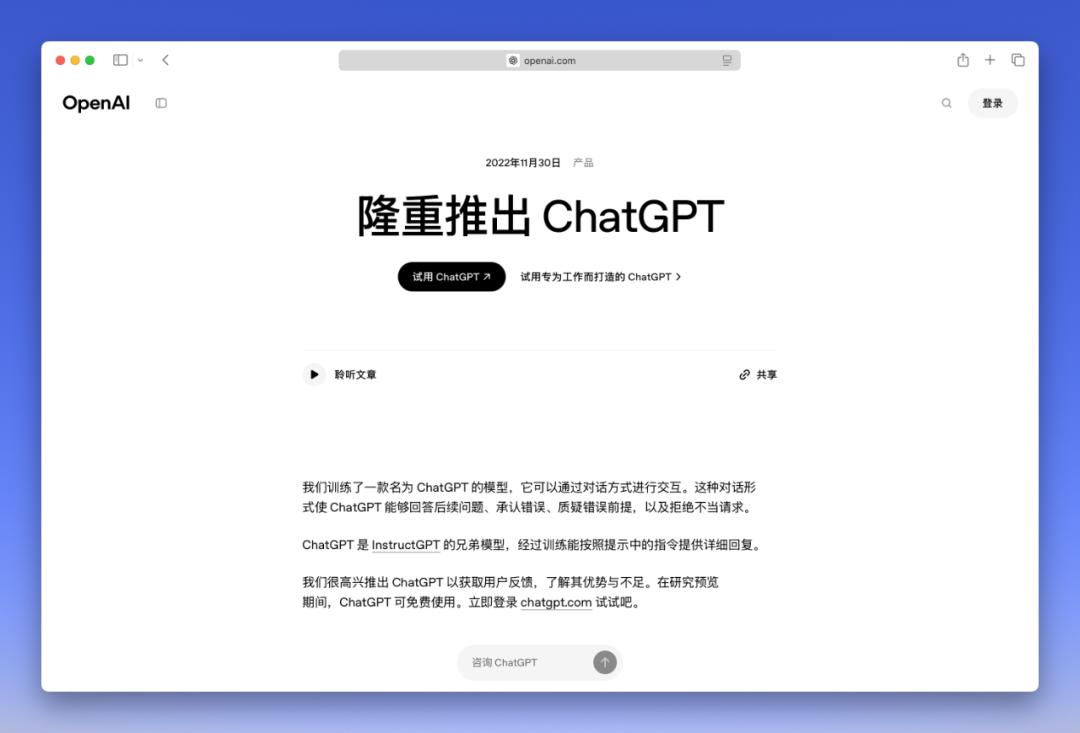
On November 30, 2022, OpenAI launched ChatGPT, changing the world in the three years since. Currently, over 800 million people globally interact with ChatGPT weekly, seeking advice or completing tasks. OpenAI, now a giant company valued at over $500 billion, is still operating at a significant loss. Tech companies worldwide are betting on the future of AI, pouring hundreds of billions into model training, computational infrastructure, and even operating system-level restructuring.
Competitive Landscape
OpenAI has become a benchmark for all companies, but its position is not secure. The emergence of DeepSeek earlier this year demonstrated that Chinese tech companies remain competitive even with limited computational power, maintaining a visible lead in critical technology areas. Traditional tech giants, once overshadowed by ChatGPT, are now catching up.
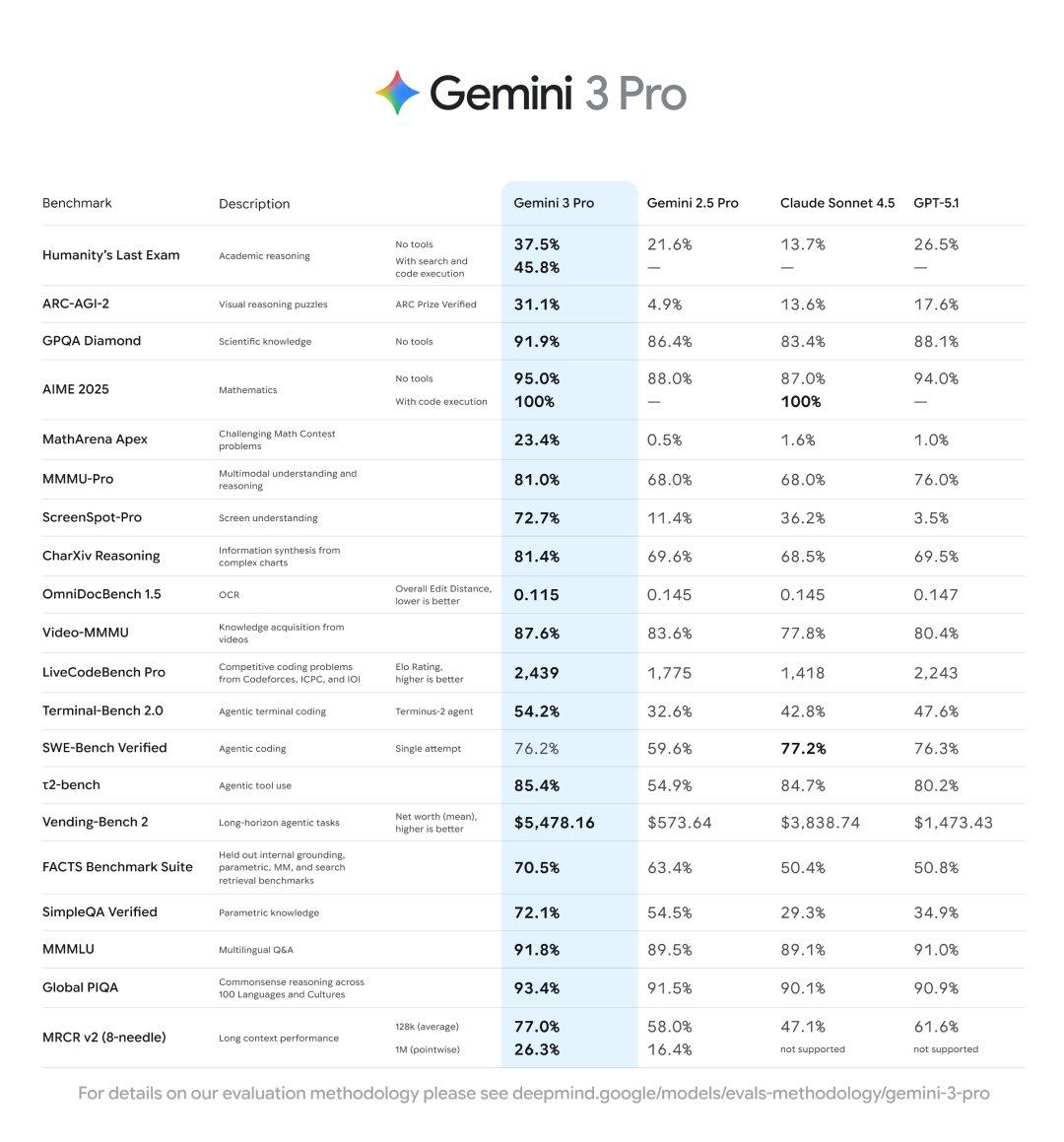
Leading the charge is Google. On November 18, Google officially launched the Gemini 3 series, claiming it to be their most intelligent and factually accurate model yet, entirely trained on self-developed TPU chips. Gemini 3 Pro quickly topped major model testing leaderboards, surpassing OpenAI’s newly released GPT-5.1 model. In the past month, Google’s stock has risen over 11%, with its market value nearing $4 trillion.
OpenAI’s Response
OpenAI’s founder and CEO, Sam Altman, tweeted in response to the launch of Gemini 3, congratulating Google and acknowledging it as a great model. However, internally, he expressed much more concern. On December 1, Altman sent an internal memo announcing that the company had entered a ‘Code Red’ status, requiring all resources to focus on improving ChatGPT, delaying other projects like advertising and personal assistants.
The ‘Code Red’ is a common term in Silicon Valley for companies facing urgent threats, with different colors indicating varying levels of urgency. Three years ago, when ChatGPT was first released, Pichai had also announced a ‘Code Red’ internally at Google, urging the company to invest in AI research. Now, the tables have turned, and OpenAI is feeling the pressure.
However, the ‘Code Red’ may not be as dire as it sounds. It serves more as a tool for management to convey urgency internally, motivating employees. In the context of Chinese internet companies, Alibaba has frequently announced ‘strategic projects’ over the past six months, often without significant outcomes.
Altman revealed in his internal memo that they plan to release a new reasoning model that will outperform Gemini 3 next week. According to reports, OpenAI is also accelerating the development of a new model codenamed Garlic, which has made breakthroughs in pre-training, allowing it to package large model knowledge into smaller architectures. The Garlic model is expected to debut as early as next year.
Code Red and Product Focus
Before declaring ‘Code Red’, OpenAI’s pace in productization and commercialization was noticeably more intense than the iteration of its underlying models. This has made it resemble a traditional internet product company rather than a cutting-edge AI research firm.
In just the past two months, OpenAI has released a series of dazzling application updates, including the Atlas browser, conversational applications for ChatGPT, group chat and shopping research features, and the Agentkit intelligent agent building tool. Users can now purchase Walmart products, create Spotify playlists, and book flights and hotels directly within ChatGPT, covering nearly all aspects of daily life.
These updates are largely due to the addition of Fidji Simo, who joined OpenAI in May. Previously, she led the Facebook app at Meta and served as CEO of Instacart, specializing in building consumer-grade super apps. As the CEO of the newly formed OpenAI applications department, Simo is responsible for product and business implementation, reporting directly to Altman.
According to The Information, about 630 of OpenAI’s employees have previously worked at Meta, accounting for roughly 20% of its current workforce, primarily concentrated in product, market growth, and commercialization areas.
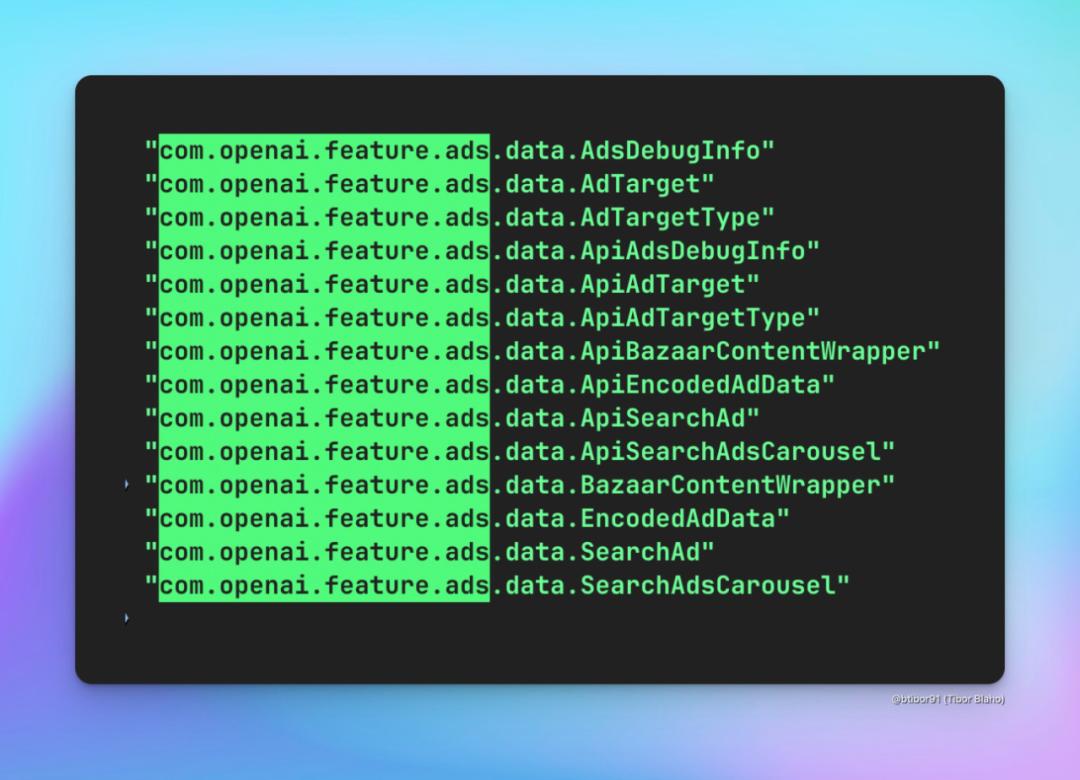
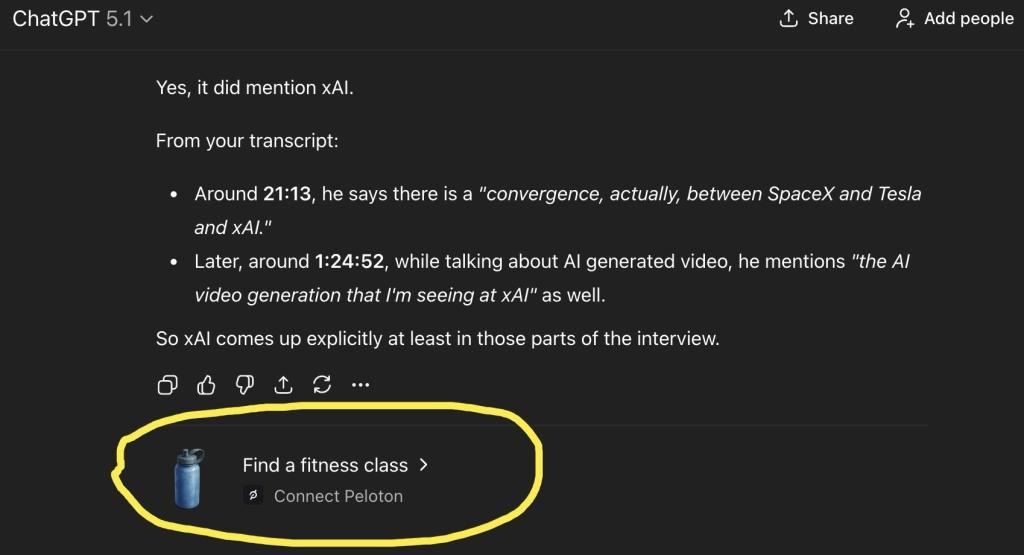
Recently, it was reported that OpenAI has integrated new code references related to advertising and commercial content into the Android beta version of ChatGPT, with users sharing screenshots of shopping ads pushed during chats that were unrelated to the conversation.
Competitive Pressure
As OpenAI accelerates its product monetization, other tech companies are intensifying their model development. Google’s launch of the Gemini 3 series is just one example, while former OpenAI executives have established the startup Anthropic, which recently updated its flagship model Claude Opus 4.5. The DeepSeek team has also released the DeepSeek-V3.2 series models.
Unlike competitors emphasizing performance breakthroughs, OpenAI’s recent update of the GPT-5.1 model was merely a minor adjustment to the GPT-5 model, focusing on more intelligent and conversational dialogue without significant performance comparisons in the official blog.
Focusing solely on personalized experiences will not help OpenAI maintain its lead, as the rapid growth of Google’s Gemini in recent months proves that model capability remains key in the AI competition. In March, Gemini had 350 million monthly active users, which surged to 650 million by October, with Nano Banana seen as a key driver of this growth.
Given Google’s vast user base, the impact of Gemini 3’s integration into Google Search is much greater than previous versions. With minimal differences in model capabilities, this distribution advantage may lead more users to shift from ChatGPT to Google’s ecosystem.
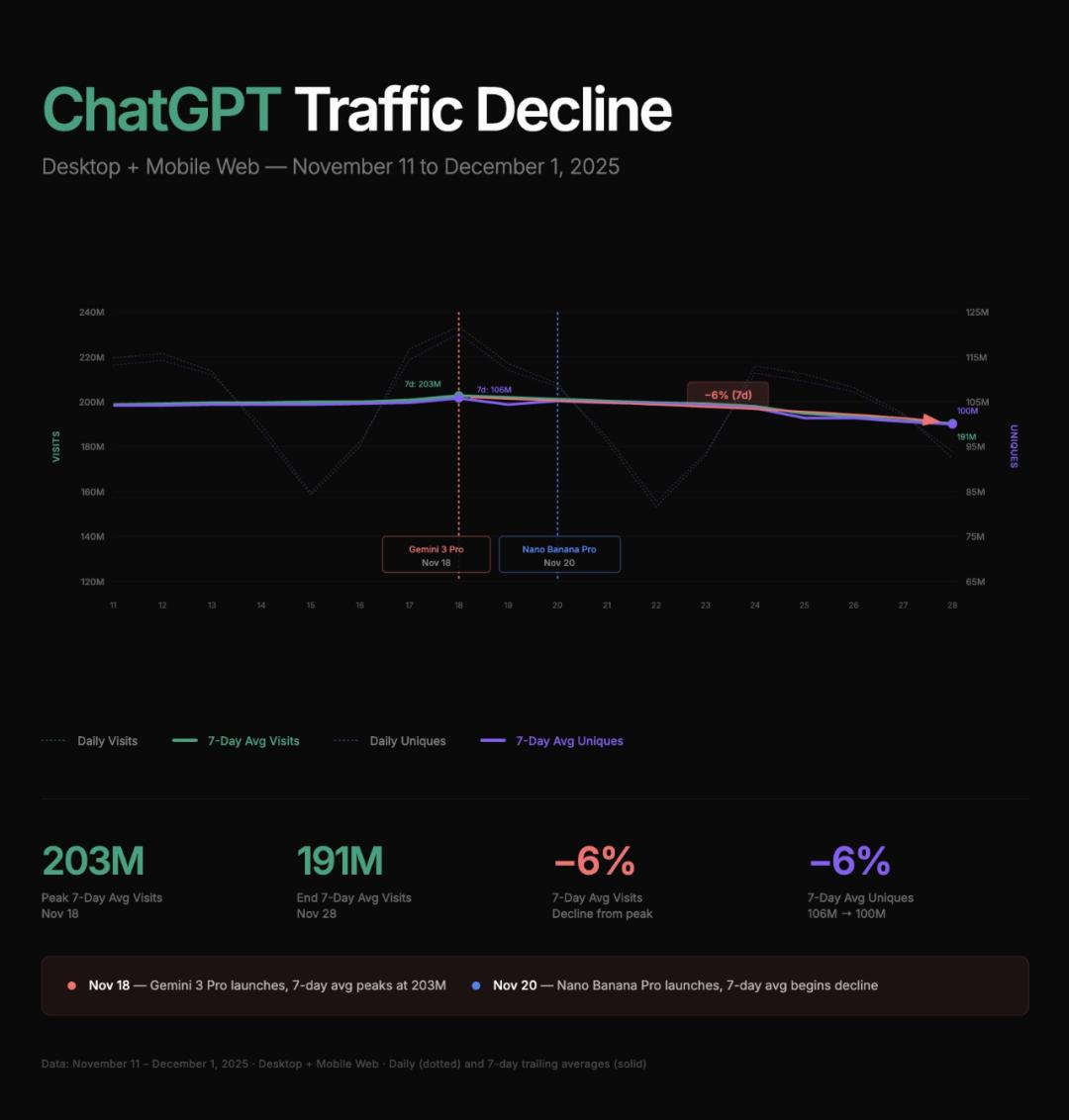
Silicon Valley investment firm Menlo Ventures’ partner Deedy Das cited Similarweb data indicating that since the launch of Gemini 3, ChatGPT’s daily active users have decreased by 6%, while Gemini’s usage has noticeably increased, with its share of ChatGPT’s traffic rising from 22% to 31%.
Conclusion
In summary, under the dual pressures of model performance and user growth, Altman announced a ‘Code Red’ internally. The Wall Street Journal noted that this notification is the clearest indication of OpenAI facing pressure from competitors, who have narrowed the startup’s lead in the AI race.
OpenAI’s aggressive product feature updates may be temporarily paused. In the internal memo, Altman stated that the company would concentrate all its efforts on improving ChatGPT’s user experience, delaying unnecessary projects such as advertising, AI agents for health and shopping, and a personal assistant named Pulse.
Altman’s priorities revolve around ChatGPT, including enhancing personalization, improving image generation capabilities, increasing speed and stability, and reducing model refusals. They also aim to improve GPT’s ranking in public testing leaderboards like LMArena.
OpenAI’s Real Concerns
It is difficult to say that OpenAI currently faces a risk of being disrupted. Even with fierce competitors like Gemini 3, ChatGPT remains the largest AI application in terms of user base globally. According to ChatGPT head Nick Turley, ChatGPT currently accounts for 70% of global AI assistant usage and 10% of search activity. “Our focus now is to continuously enhance ChatGPT’s capabilities and expand its reach globally.”
However, all of this relies on OpenAI maintaining a lead in model performance. Since the release of GPT-5, the gap between OpenAI and other tech companies has been narrowing, and ChatGPT’s user growth has begun to slow.
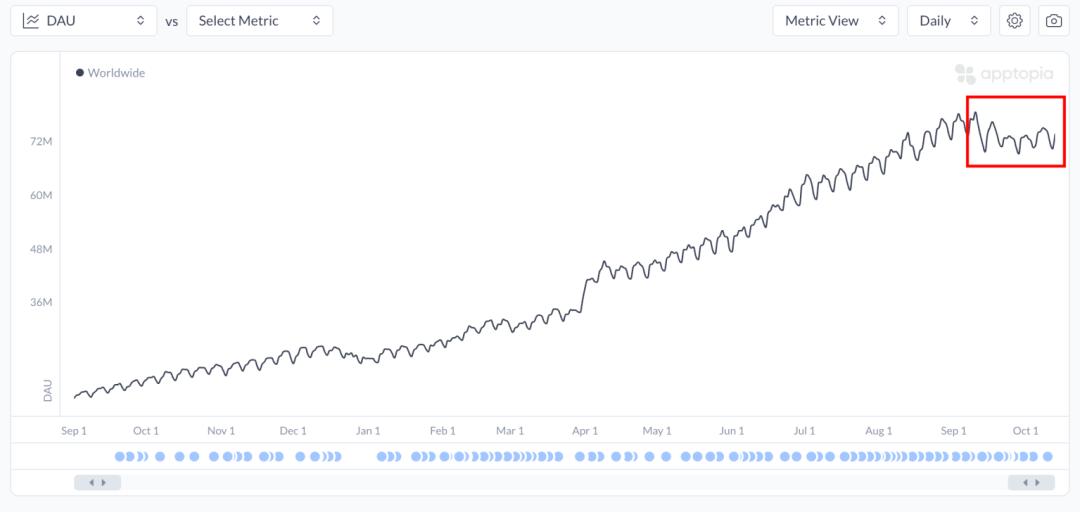
Third-party data company Apptopia reported that ChatGPT’s daily active user growth has significantly slowed since April, stagnating from September onward. Additionally, the average usage time of daily active users in the U.S. has decreased by 22.5% since July, with the average number of conversations dropping by 20.7%.
Deutsche Bank previously tracked financial transaction data in the European market and found that ChatGPT’s monthly spending growth rate has significantly slowed since May 2025, suggesting that ChatGPT’s paid user growth in Europe may have stagnated. This could be one reason for OpenAI’s accelerated commercialization efforts over the past year.
Meanwhile, OpenAI continues to maintain unprecedented spending on AI infrastructure. After completing a profitable restructuring, Sam Altman announced that OpenAI would significantly expand its infrastructure investment, ultimately aiming to invest $1 trillion annually in infrastructure.
So far, OpenAI has committed approximately $1.4 trillion to infrastructure development, with a partner list that includes Nvidia, AMD, Oracle, and Broadcom. These giants often see their stock prices soar due to their dealings with OpenAI.
U.S. tech media are particularly concerned about whether OpenAI’s financial situation can support such massive capital expenditures. Unlike traditional giants like Google, which have existing business models to provide funding, OpenAI’s funding primarily comes from venture capital, and it remains significantly in the red.
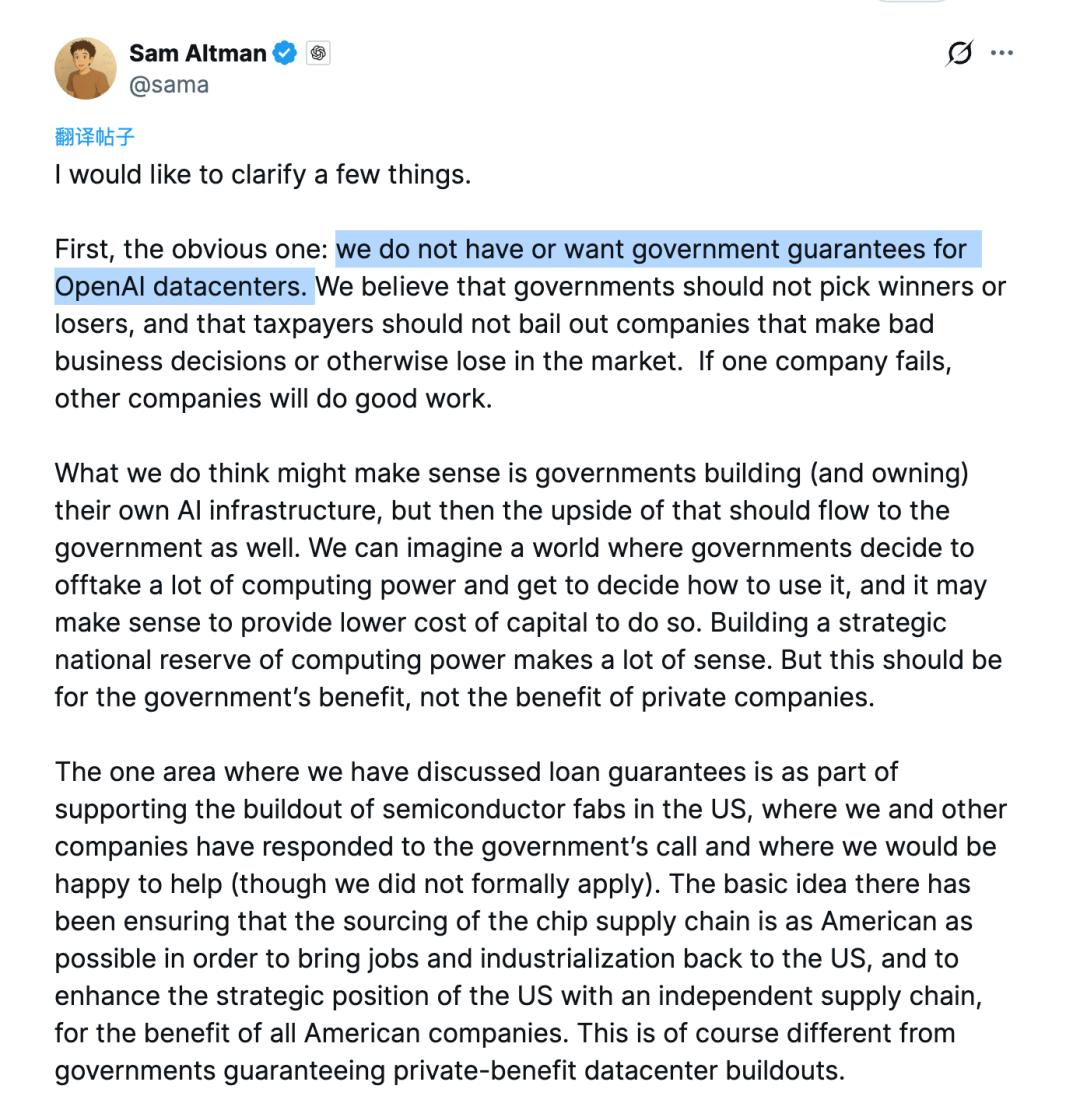
Recently, OpenAI’s CFO Sarah Friar expressed support for introducing government funding to back AI infrastructure, which sparked considerable controversy in the U.S., with critics accusing OpenAI of seeking government bailouts for its massive AI investments. Friar later clarified that OpenAI is not seeking government guarantees.

Sam Altman also had to issue a lengthy response, stating, “We do not need or want the government to back our data centers.” Altman emphasized that OpenAI will rely on its revenue growth, external investments, and future sales of computational power to support its infrastructure investments.
According to him, OpenAI’s revenue is expected to exceed $20 billion this year, growing to hundreds of billions by 2030. However, even with these revenues, they still cannot cover OpenAI’s current capital expenditures.
Altman believes that now is a critical time for OpenAI to expand its AI infrastructure investments, requiring substantial upfront funding rather than a gradual approach. “Large infrastructure projects take a long time to build, so we must act now.”
He stated that the risk of insufficient computational capacity is greater and more likely than the risk of overcapacity. “Everything we see indicates that the world’s need for computational power will far exceed our plans.”
The birth of ChatGPT exemplifies the principle of ‘miracles through hard work.’ Before ChatGPT, most mainstream models had parameter counts below 300 million. In 2022, OpenAI raised the parameter count of GPT-3 to 175 billion, finally showcasing the emergence of intelligence in large models. By the end of the year, OpenAI released ChatGPT based on the GPT-3.5 model, marking the official arrival of the AI era.
Now, Sam Altman is attempting to maintain OpenAI’s lead through even larger computational infrastructure. Until everything settles, it is difficult to judge whether OpenAI’s choices are correct. At the very least, it has already brought enough people on board.
“Our goal is to become an extremely successful company, but if we make mistakes, the responsibility lies with us,” said Sam Altman.
Comments
Discussion is powered by Giscus (GitHub Discussions). Add
repo,repoID,category, andcategoryIDunder[params.comments.giscus]inhugo.tomlusing the values from the Giscus setup tool.