Hello everyone, I am Programmer Yupi.
To help everyone understand the rapidly changing AI industry, I plan to create a “Weekly AI Highlights” series to emphasize key points. Each week, you only need to spend a few minutes reading, so you won’t have to worry about missing anything.
Weekly AI Highlights:
- Cursor accused of using Kimi K2.5, founder apologizes
- Xiaomi launches MiMo-V2 series, Lei Jun invests 16 billion
- Wang Ziru’s hiring of “01 Full-Stack Employee” sparks controversy
- Many companies report significant layoffs
- Altman posts “Thanks to Programmers” and faces ridicule
- Tencent integrates WeChat with ClawBot
- CCTV 315 exposes GEO poisoning industry chain
- OpenClaw accuses Tencent of plagiarism, becomes sponsor after 4 days
- Ant Group tests AI Coding in interviews
Let’s discuss each point in detail.
1. Cursor Accused of Using Kimi K2.5, Founder Apologizes
Last week, Cursor released its so-called “self-developed” programming model Composer 2. The official blog boasted that its performance surpassed Claude Opus 4.6, priced at only one-tenth of the latter.
However, within two hours, developer Fynn reverse-engineered Cursor’s API requests and uncovered the internal model ID: kimi-k2p5-rl-0317-s515-fast.
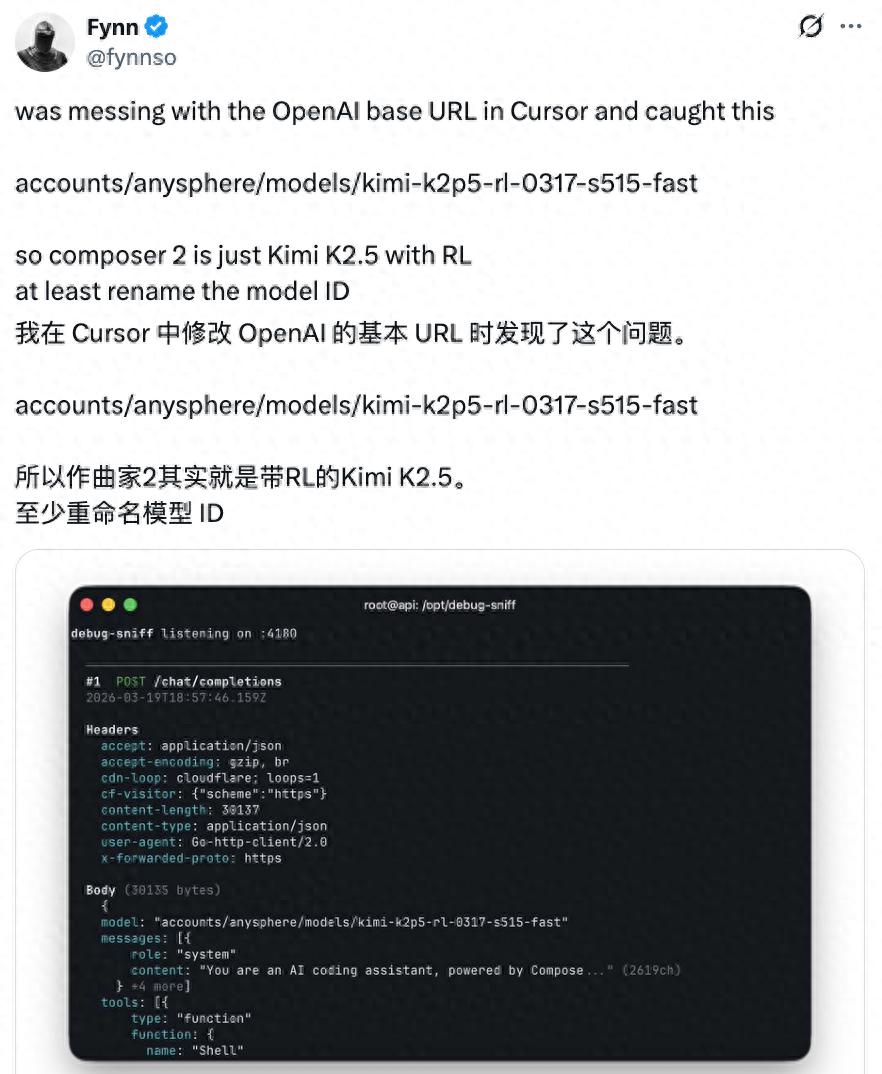
This name clearly indicates it is Kimi K2.5 with reinforcement learning fine-tuning, showing a lack of effort in modification.
Elon Musk personally commented on X, stating, “It’s just Kimi 2.5,” and the pre-training lead for the Dark Moon project confirmed that the tokenizer was identical.
Cursor’s founder, Aman Sanger, eventually admitted that the base indeed came from Kimi K2.5, with about a quarter of the computation sourced from this open-source model, while the remaining three-quarters involved their own continuous pre-training and reinforcement learning. He stated, “Not mentioning Kimi in the blog was our oversight.”
However, the issue is not just about attribution. The license for Kimi K2.5 clearly requires products with monthly revenues exceeding $20 million to label “Kimi K2.5” in their interface. Cursor’s annual revenue is $2 billion, and they failed to meet this basic requirement?
As one of Cursor’s investors (having purchased a membership), I express my disappointment.
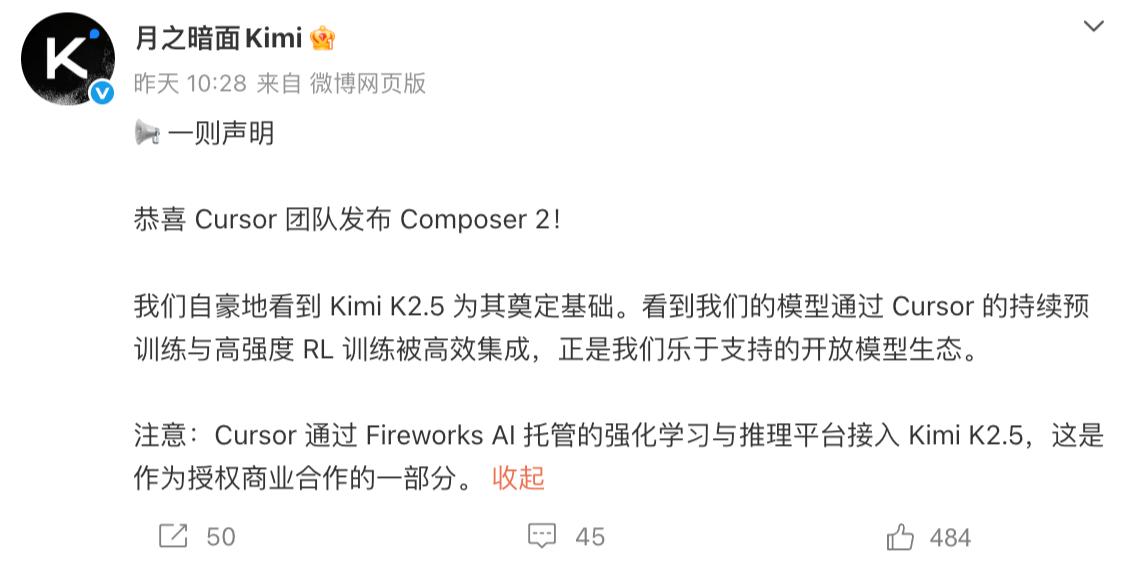
Fortunately, the official Dark Moon account later issued a statement saying this was an “authorized commercial collaboration,” which opened up new possibilities!
2. Xiaomi Launches MiMo-V2 Series, Lei Jun Invests 16 Billion
Xiaomi’s recent moves have been quietly impactful. In the early hours of March 19, they launched three major models: the flagship text base MiMo-V2-Pro, the multimodal base MiMo-V2-Omni, and the speech synthesis MiMo-V2-TTS.
Among them, MiMo-V2-Pro features a trillion-parameter MoE architecture, activating 42 billion parameters and supporting 1 million token contexts, deeply optimized for agent scenarios.
Interestingly, Xiaomi previously released this model anonymously on OpenRouter under the name “Hunter Alpha,” without attaching a brand name, allowing developers to vote with their feet.
It quickly topped both daily and weekly charts, ranking eighth in the global comprehensive ranking of large models by Artificial Analysis, and fifth by brand, surpassing xAI Grok!
At that time, the entire internet was guessing which company this model belonged to, with many believing it was an early leak of DeepSeek V4, only to be claimed by Xiaomi, which was indeed surprising.
Lei Jun stated that Xiaomi’s R&D and capital investment in the AI field this year will exceed 16 billion yuan, adding a confident remark: “We are relatively low-key in the AI field, but our actual progress is much faster than what everyone sees.”
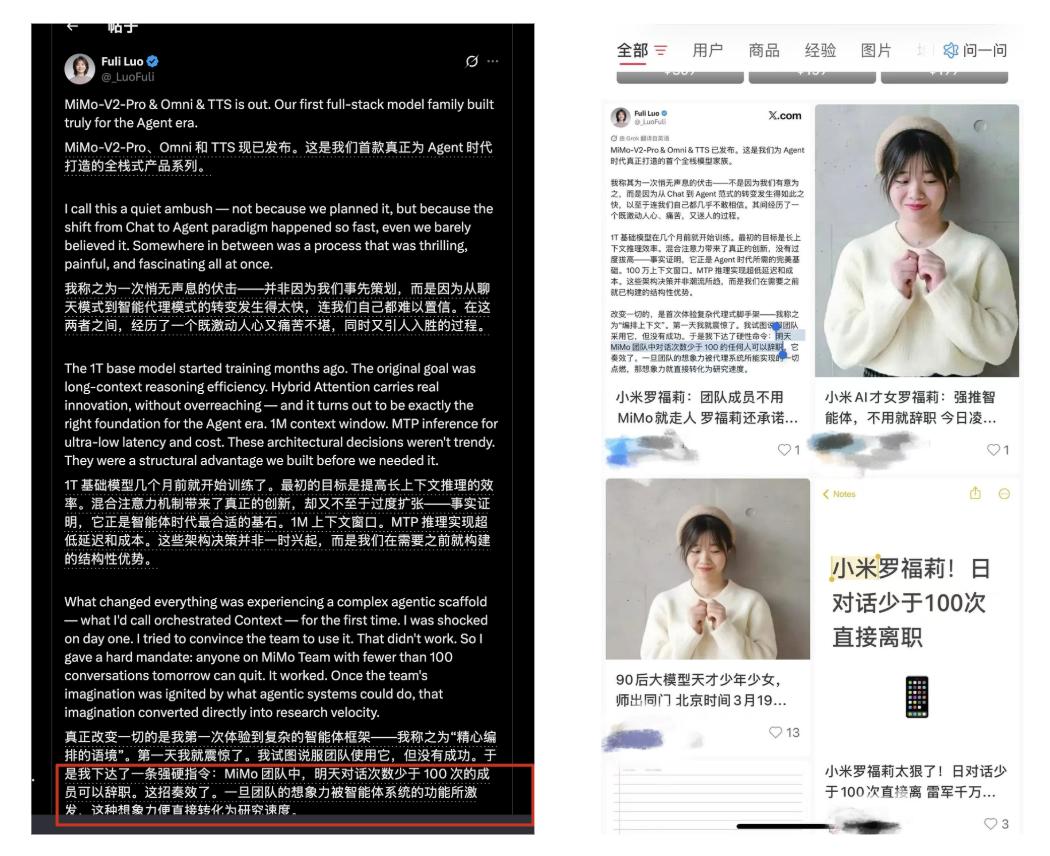
Many core members of the MiMo team come from Peking University, and the lead, Luo Fuli, previously participated in the development of DeepSeek-V2, earning the title of “genius girl” in the industry. It must be said that Xiaomi’s AI efforts have indeed been underestimated in recent years.
3. Wang Ziru’s Hiring of “01 Full-Stack Employee” Sparks Controversy
Wang Ziru posted a recruitment ad on social media, seeking an “01 Full-Stack Frontend Engineer” for his new startup project.
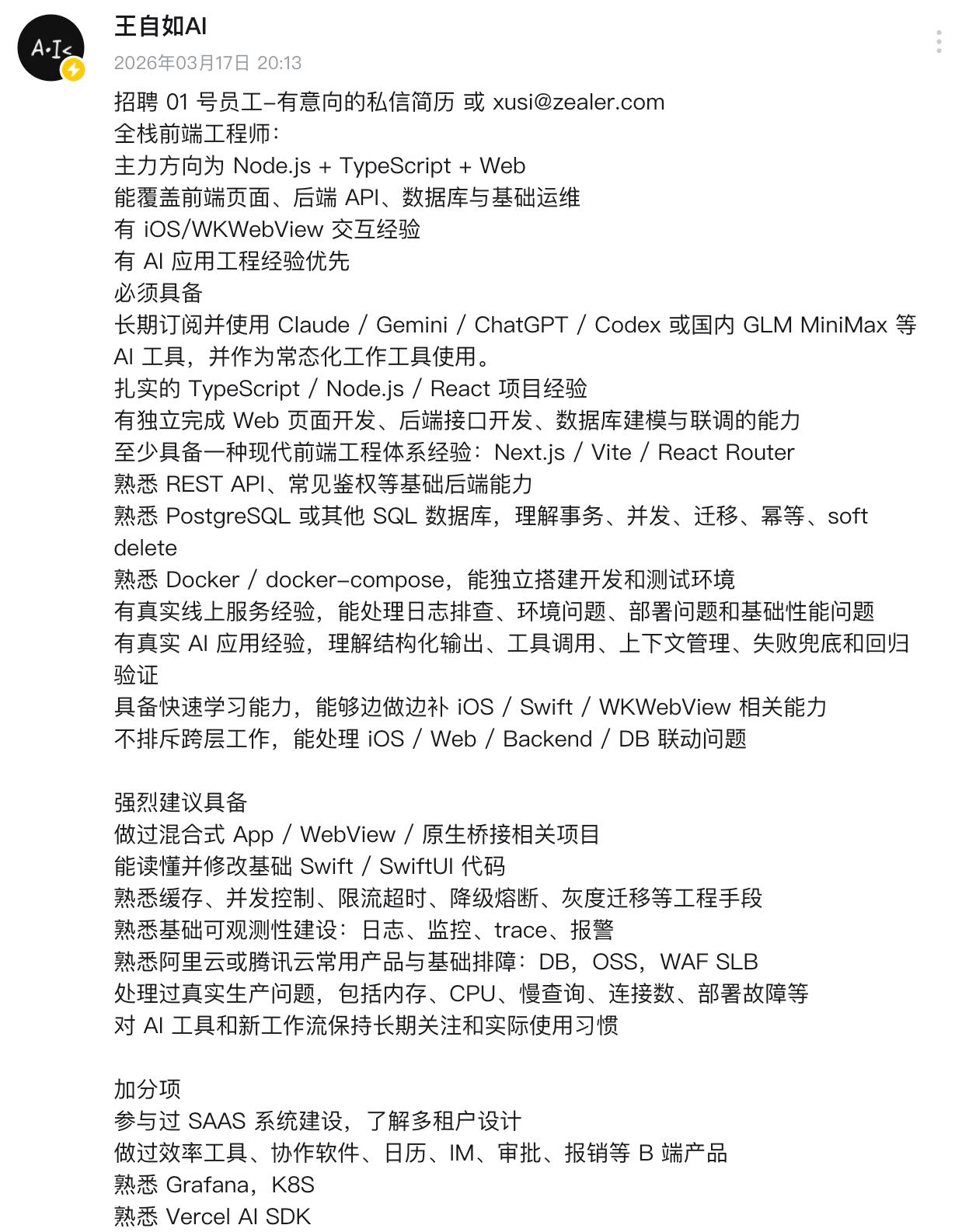
The job requirements prompted an immediate backlash from netizens: the frontend requires React/Next.js, backend needs Node.js/TypeScript, database experience with PostgreSQL, operations knowledge of Docker, and iOS development experience (WKWebView/Swift) is also necessary. Additionally, candidates must have long-term subscriptions to AI tools like Claude, Gemini, and ChatGPT, and understand structured outputs and tool calls.
Netizens questioned whether this was a job for one person or a whole team.
Critics argue this is a way to exploit individuals under the guise of AI, shifting the problem of unclear responsibilities and staffing shortages onto individuals while packaging it as “full-stack capability in the AI era.”
Supporters argue that early-stage startup employees must be versatile, emphasizing the importance of adequate salary and equity.
In reality, the definition of full-stack in the AI era is indeed changing; one person can accomplish much more with AI tools than before. However, as the skill requirements increase, compensation must also keep pace.
4. Many Companies Report Significant Layoffs, AI Changing Employment Structure
Many have noticed a surge in layoff rumors this week.
Numerous messages circulated online about “significant layoffs in technical positions at certain companies,” with some companies officially denying these claims, and even some rumor-mongers being administratively detained.
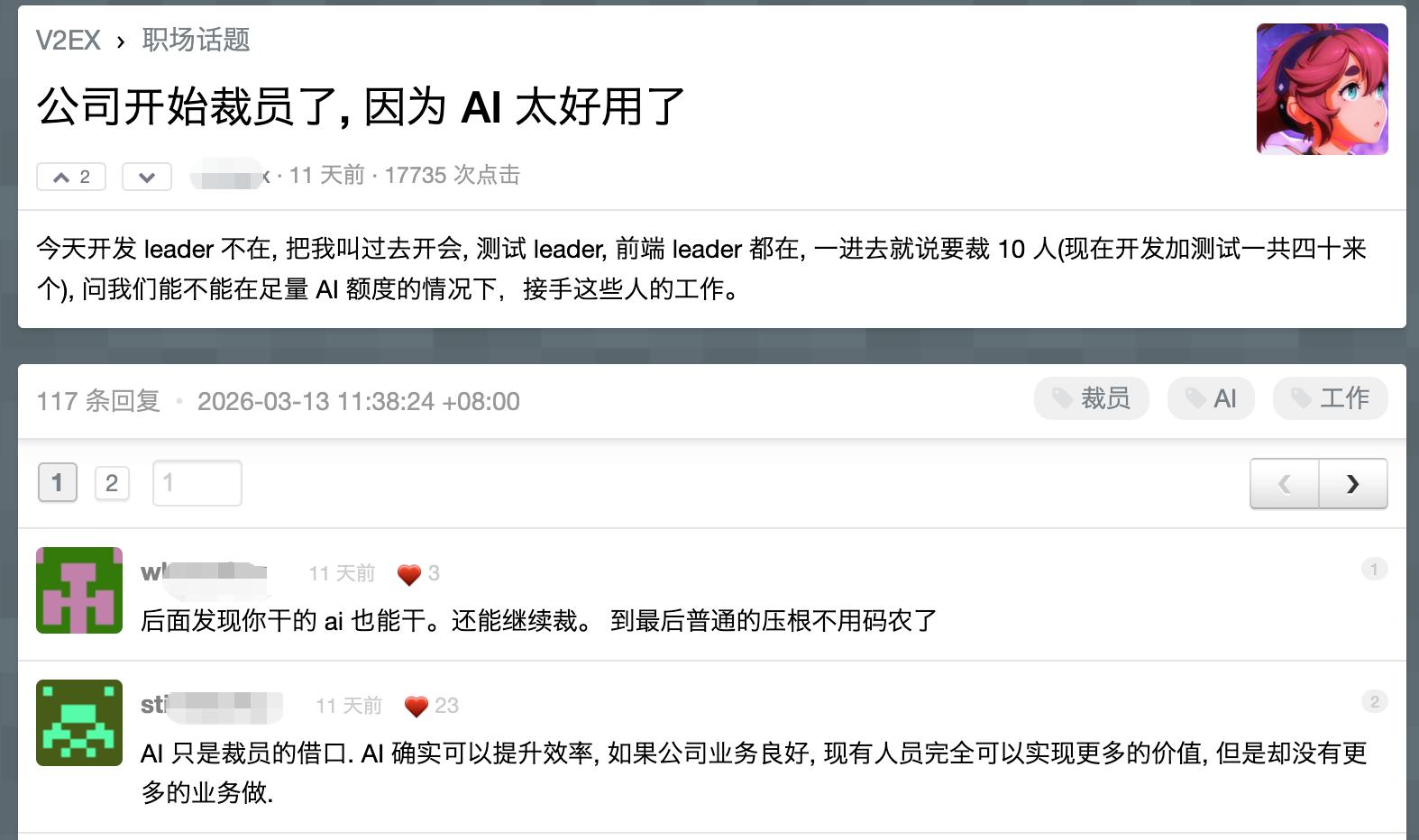
From what I’ve observed, AI’s impact on improving research and development efficiency is staggering, leading to structural changes across the industry. Many companies are using AI to reshape job configurations, actively abandoning inefficient projects while aggressively hiring for new AI-related positions. However, many numbers circulating online have been severely distorted after several rounds of sharing.
Therefore, I recommend not to be swayed by anxiety-inducing posts. Instead, focus on primary information sources, and rather than feeling anxious, take action to learn more AI-related skills to enhance your irreplaceability.
5. Altman Posts “Thanks to Programmers” and Faces Ridicule
On March 17, Altman posted on X expressing gratitude to those who write complex software line by line, stating he could hardly remember the effort it required. He thanked them for getting us to where we are today.
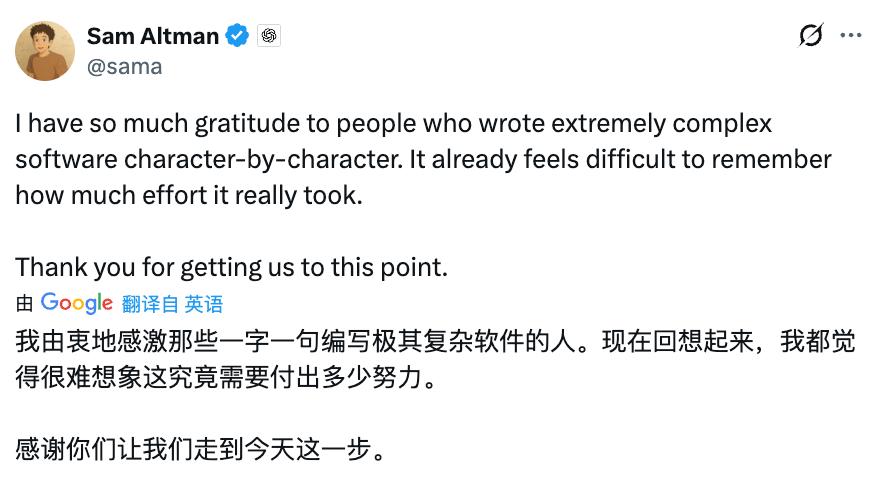
This post might not have raised eyebrows at another time, but it coincided with significant layoffs in the tech industry. The post garnered over 5 million views and thousands of comments, mostly mocking.
One particularly cutting comment read: “Thanks for your work; now it’s mine.”
Another stated: “Nothing is more suffocating than being sincerely thanked by the person replacing you.”

OpenAI’s models are trained on code written by programmers, now replacing their jobs while pretending to express gratitude?
Interestingly, Musk’s AI chatbot Grok provided a relatively calm response, stating that software engineering is not disappearing but rapidly evolving, and human developers remain irreplaceable in architecture design, debugging, and innovation. In my judgment, both sides have valid points, but Altman’s timing for this post indeed seems a bit out of touch.
6. Tencent Integrates WeChat with ClawBot
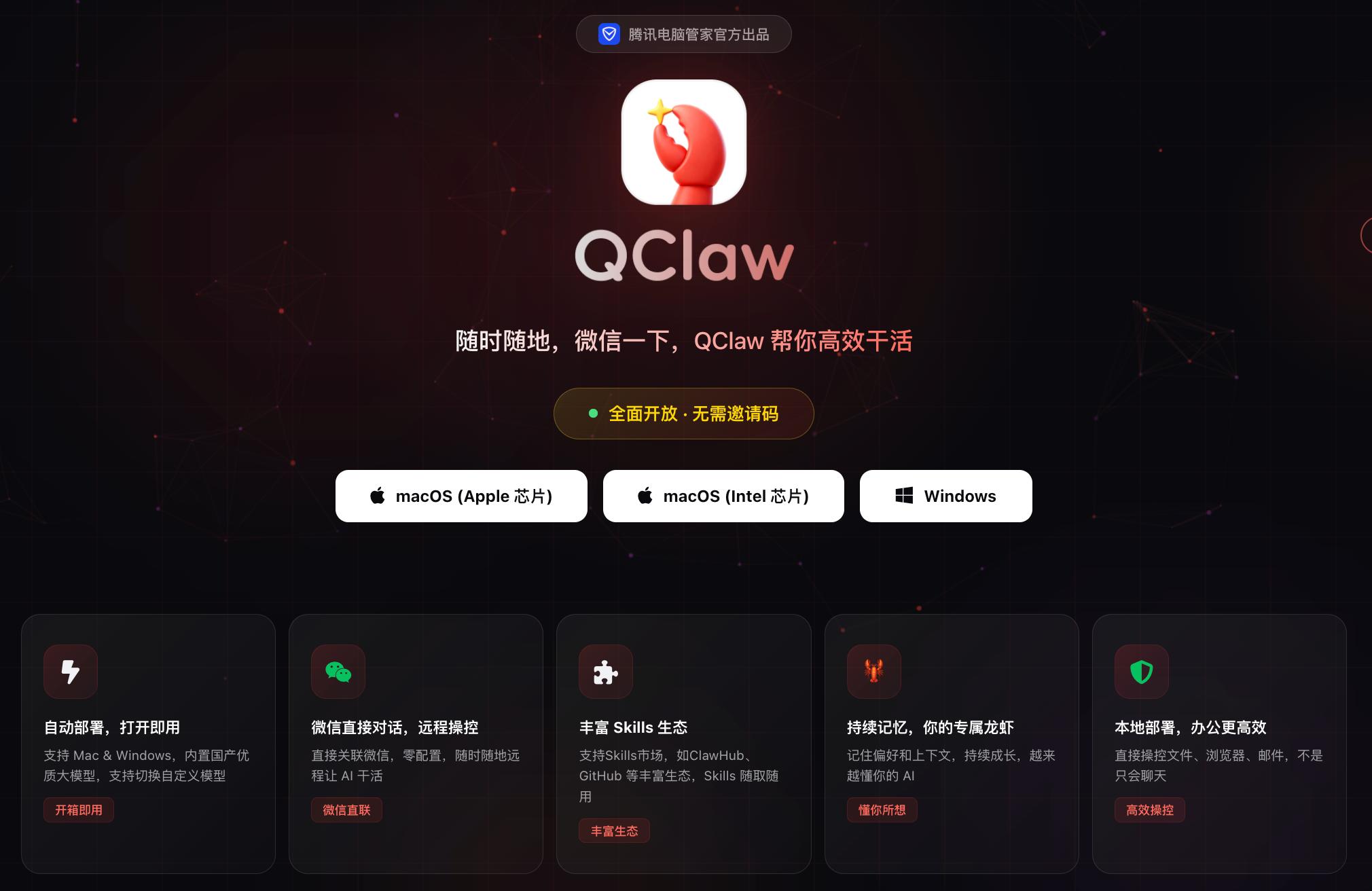
Today, Tencent officially launched the WeChat ClawBot plugin, allowing users to scan a code or copy a command to integrate OpenClaw with WeChat, enabling direct interaction with their lobster through chat.
Zhang Jun stated that WeChat’s goal has always been to be a tool that connects people, devices, and services, and this concept has now been realized through ClawBot.
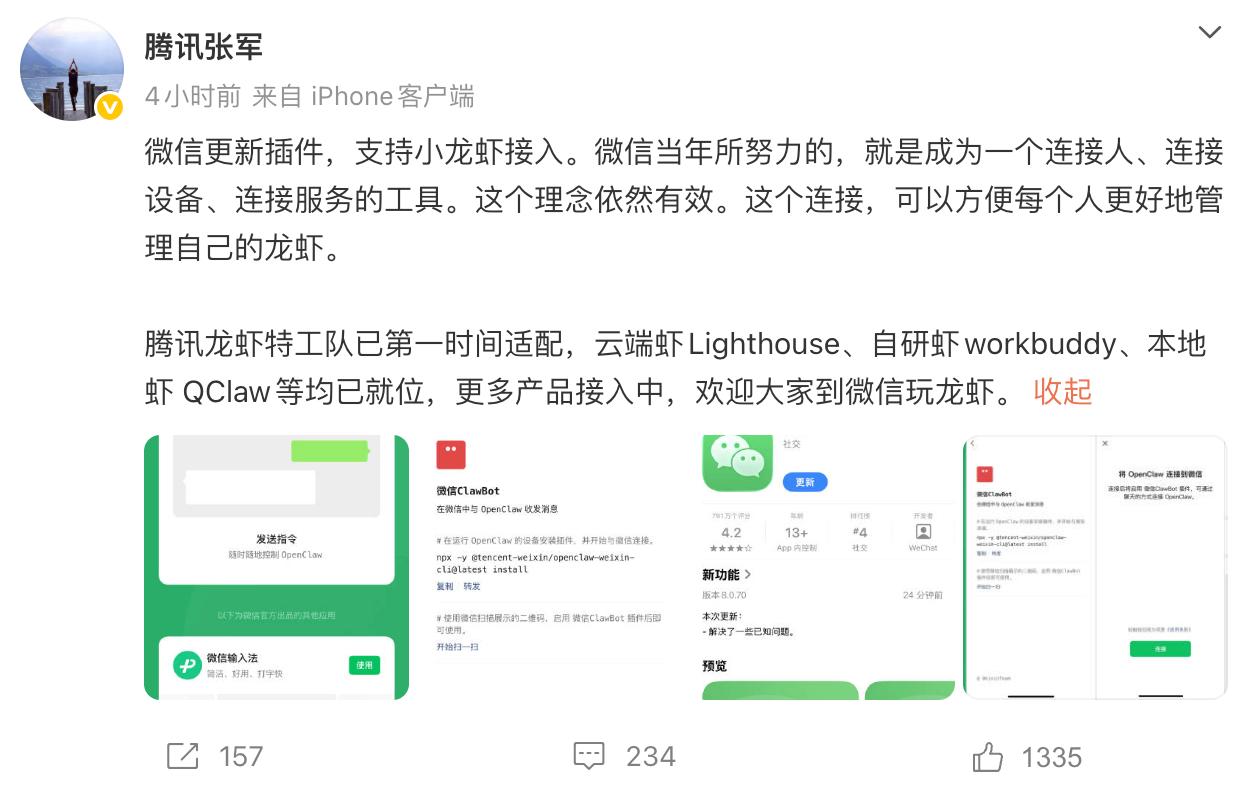
This marks the climax of Tencent’s recent series of moves in the AI Agent direction.
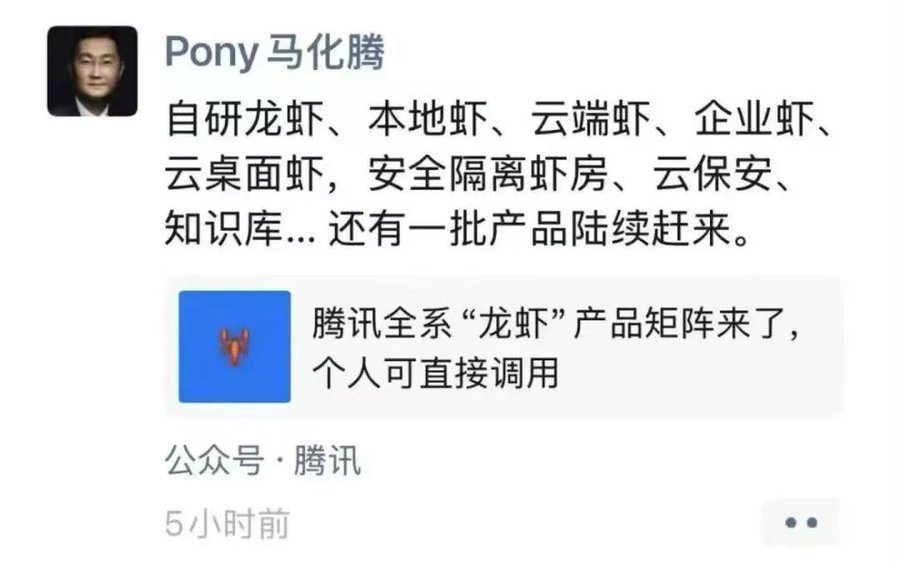
On March 11, Ma Huateng posted at 2 AM, revealing the development of “self-developed lobsters, local lobsters, cloud lobsters, enterprise lobsters… and a batch of products coming soon.”
On March 18, QClaw underwent full public testing, no invitation code required, and can be integrated into five major platforms: WeChat, QQ, WeChat Work, Feishu, and DingTalk, completing installation in 20 seconds for easy lobster farming.
During the financial report conference on March 18, Ma Huateng specifically discussed his understanding of lobsters, stating that lobsters differ from traditional chatbots, possessing a “human-like feel,” acting as a simulated assistant with personality and memory, and becoming more understanding the more they are used.
Clearly, Tencent is aiming to seize the entry point for AI Agents, lowering the threshold from geek command lines to sending WeChat messages, connecting a social ecosystem of 1.4 billion people, effectively “killing the competition.”
7. CCTV 315 Exposes GEO Poisoning Industry Chain
The 315 Gala revealed a major scandal. A reporter used a tool called “Liqing GEO Optimization System” to fabricate a smart wristband named Apollo-9, creating a series of fake selling points like “quantum entanglement sensors” and “black hole-level battery life,” and the system automatically generated dozens of fake articles published on self-media platforms.

Within just two hours, two mainstream AI models recommended this non-existent product when searching for “smart wristband recommendations.”
GEO stands for Generative Engine Optimization, essentially AI-era SEO aimed at prompting AI to recommend certain products when answering questions.
Its attack paths mainly include three methods:
- Polluting training data
- Hijacking RAG retrieval context
- Injecting prompts into information sources
This system claims to control eight mainstream models, with an annual fee of only 6,000 to 8,000 yuan, and the entire market scale has exceeded 4.2 billion yuan.
After the exposure, some conducted comparisons with several mainstream models to see who still recommended the fictional Apollo-9 wristband. It turned out that Doubao and DeepSeek responded the fastest, already updating data or correctly identifying false information, while Qianwen and Yuanbao were still recommending the non-existent product at that time.
This incident serves as a reminder: AI recommendations should not be blindly trusted, especially in shopping, medical, and financial fields, where older generations may be more easily deceived by AI’s claims. When using AI for inquiries, it’s essential to compare multiple information sources and verify answers.
8. OpenClaw Accuses Tencent of Plagiarism, Becomes Sponsor After 4 Days
On March 12, OpenClaw founder Peter Steinberger publicly accused Tencent’s SkillHub platform of extensively scraping all skills from ClawHub, importing them to their platform without giving back to the community, which significantly increased his server costs to five figures.
His statement was, “They plagiarized without supporting the project in any way.”
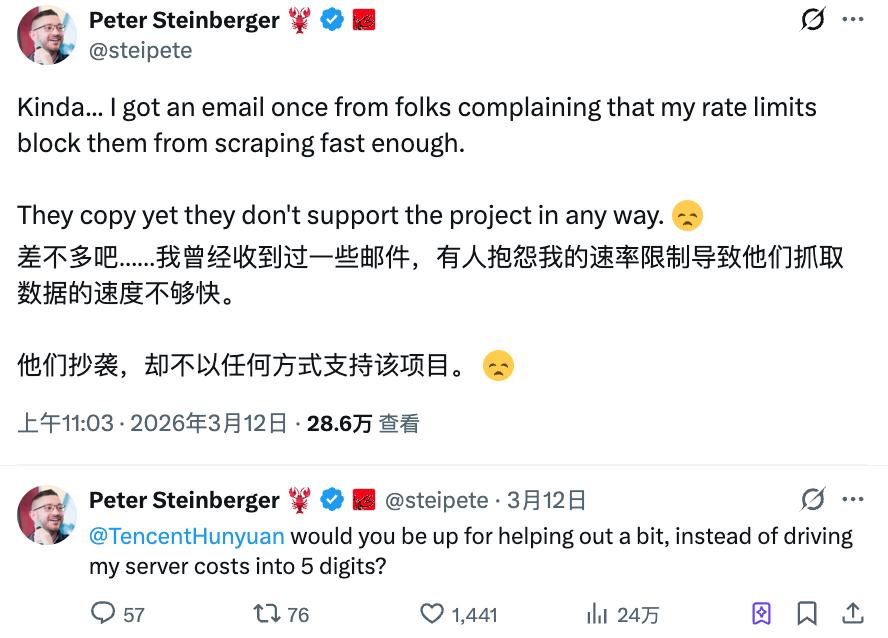
Tencent responded quickly, stating that SkillHub is a local mirror site for Chinese users and has always credited ClawHub as the data source. In its first week, it distributed 180GB of data to users (870,000 downloads), but actually pulled only about 1GB from the official source, helping to alleviate a significant amount of traffic for the official site. Additionally, Tencent team members are active contributors to the OpenClaw project.
Dramatically, just four days later, the situation reversed!
On March 15, Peter Steinberger confirmed that Tencent Cloud and Tencent AI officially became sponsors of OpenClaw. The transition from “plagiarism accusation” to “official sponsorship” occurred in just four days, showcasing that the open-source community can sometimes be more dramatic than television.
9. Ant Group Tests AI Coding in Interviews
This year’s spring recruitment trends have shifted significantly, with Ant Group being one representative.
Technical positions account for 85%, with over 70% directly related to AI, and they have specifically launched an AI talent initiative.
Moreover, the written test has introduced AI Coding questions for the first time, marking a first in large company spring recruitment.

Many friends have shared their interview experiences on our programming navigation platform, with one interview featuring over ten consecutive questions related to Agents, such as what the MCP protocol is, how multiple Agents collaborate, best practices for Prompt Engineering, the complete process of RAG systems, implementation details for tool calls, and how to handle hallucination issues in large models. Essentially, they covered the entire knowledge system of AI engineering.
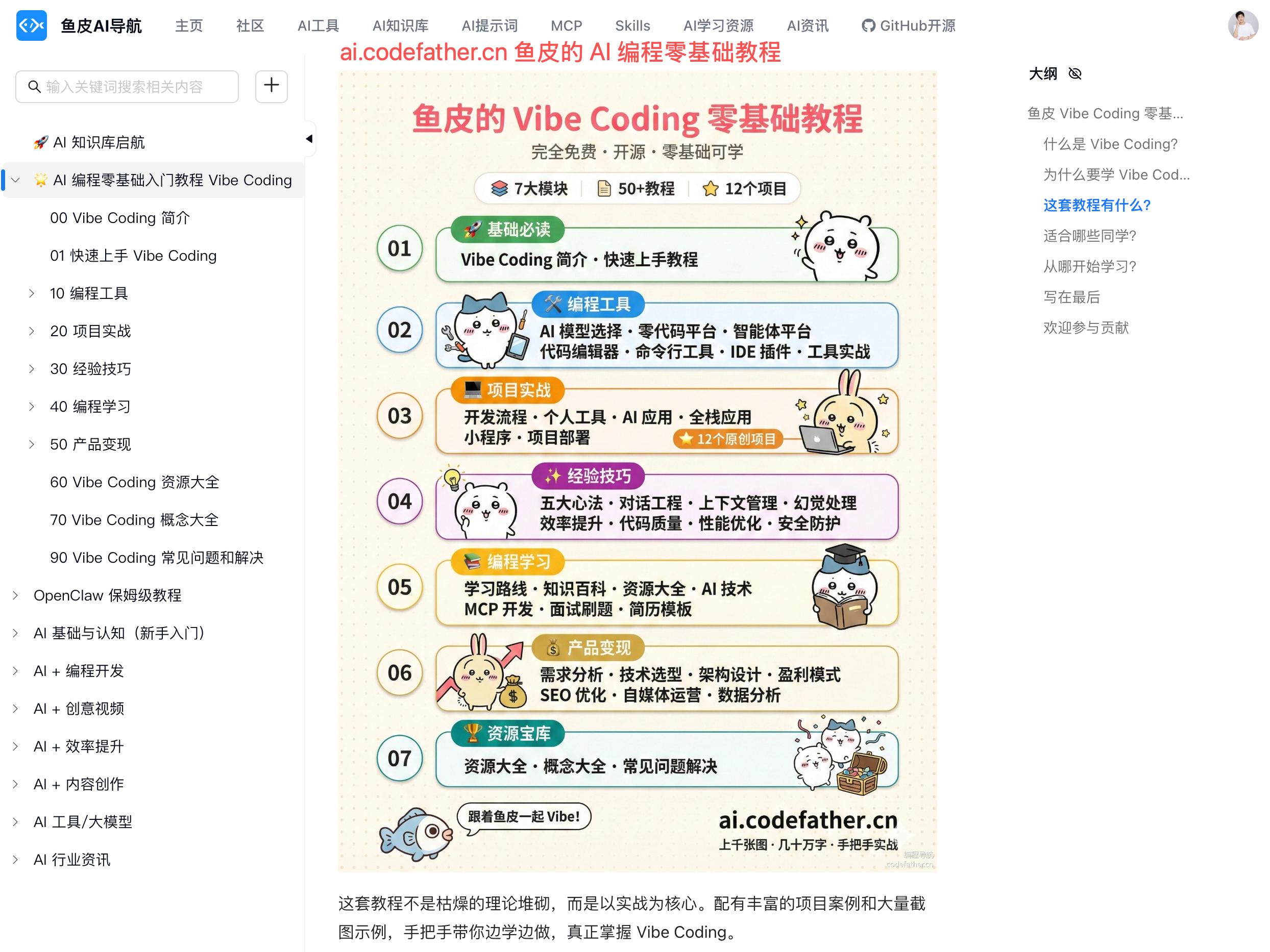
In fact, similar interview questions were common as far back as 25 years ago, and I have shared them with everyone before. From my observations, AI programming is no longer just a bonus; it is becoming the passing line for programmer interviews. Regardless of whether you are in frontend or backend development, incorporating learning about Agents and AI tools into your plans is essential. You can start quickly with my free “AI Programming Zero to Hero” tutorial to create your own AI applications.
Conclusion
This week’s highlights are rich in information, but the core message is clear: AI is accelerating its penetration into every corner of the industry, whether it be development tools, job interviews, or corporate hiring practices, the pace of change is faster than most people realize.
Which highlight do you think was the most explosive this week? If you find this weekly AI highlights series valuable, please give it a thumbs up to support, and I will continue to update it to help everyone track the major and minor events in the AI circle.
Comments
Discussion is powered by Giscus (GitHub Discussions). Add
repo,repoID,category, andcategoryIDunder[params.comments.giscus]inhugo.tomlusing the values from the Giscus setup tool.