
AI Application Trends
Compiled by: Bi Weihao
Edited by: Mo Ying
On April 17, it was reported that Anthropic released the next generation model, Claude Opus 4.7. Boris Cherny, the creator of Claude Code, shared his tips after testing the new model on social media.
According to Boris, Opus 4.7 is smarter, more proactive, and more precise than version 4.6, and even he took a few days to learn how to use the new model efficiently.
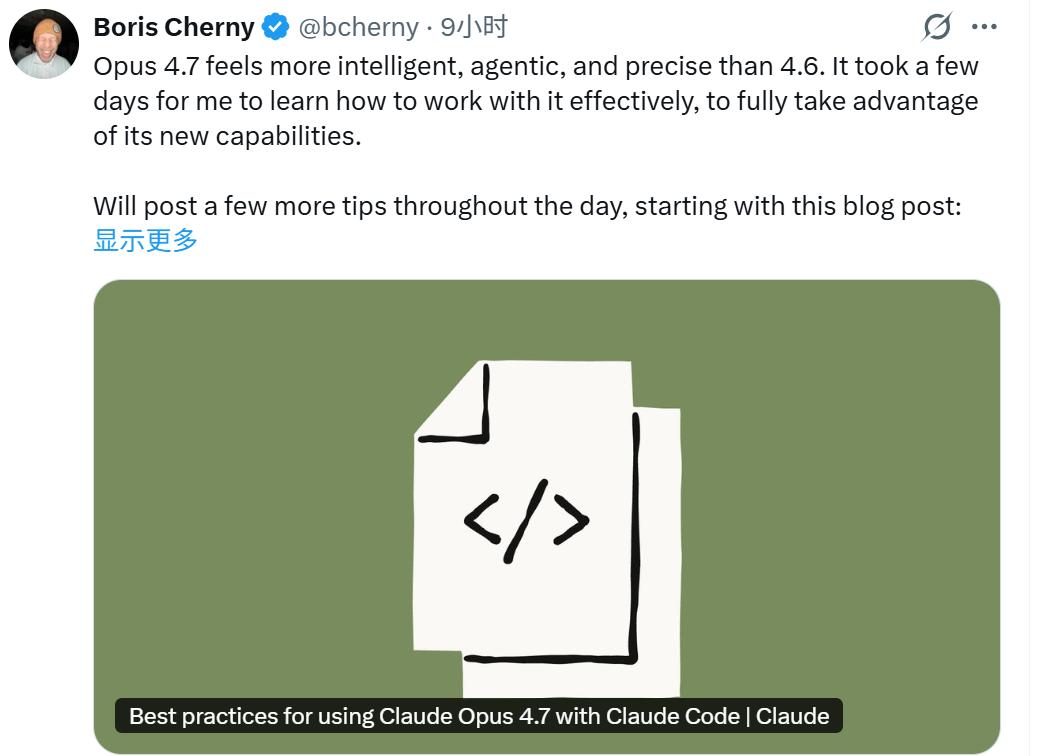
Boris first published a blog post and then shared usage tips on Twitter just two hours later, showing his enthusiasm.
In his blog, he addressed a concern many users have: token usage. The tokenizer and Opus model’s inclination for deep thinking in version 4.7 affects token consumption, requiring adjustments in Claude Code for optimal results.

Boris provided several tips to enhance efficiency, result quality, and user experience. Here’s a summary of his best practices from both the blog and his tweets.
1. Treat Claude as an Outstanding Engineer and Enable Automatic Mode
Boris admitted that while Opus 4.7 is more capable, it tends to engage in deep thinking during later stages of conversations, increasing token consumption. Therefore, constructing efficient interactive dialogues is key to saving tokens. Users should treat Claude as a capable engineer that can work independently without step-by-step commands.
Specifically, users should clearly articulate their task requirements in the first conversation, including task intent, constraints, acceptance criteria, and relevant file paths. This approach allows Opus 4.7 to better handle complex tasks.
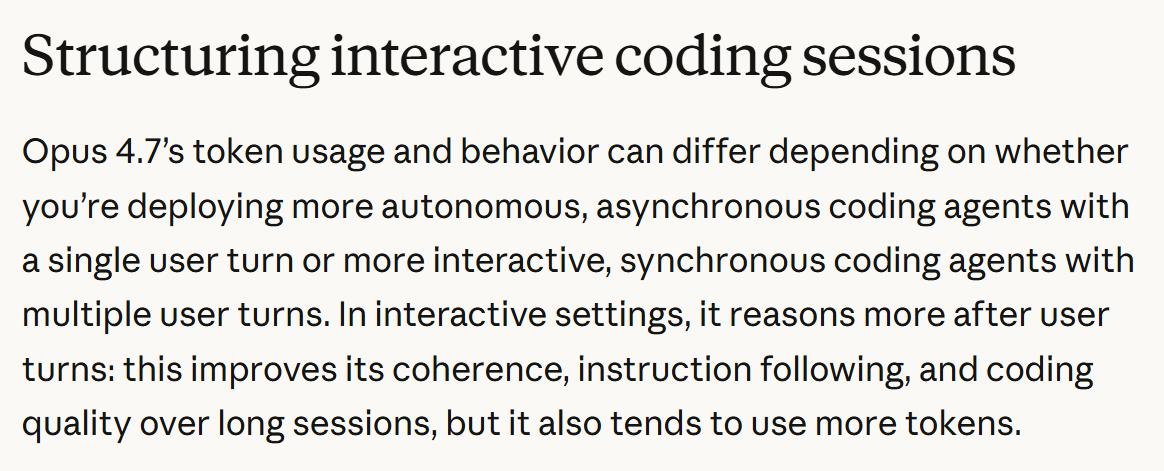
Boris stated that inserting vague prompts in multi-turn dialogues often reduces token efficiency and may affect output quality. Each interaction increases token consumption, so it’s best to consolidate questions to minimize interactions.
In addition to user requests, Claude Code has an automatic mode for assistance. This mode allows Claude Code to handle tasks entirely autonomously without user intervention, even bypassing permission confirmations.
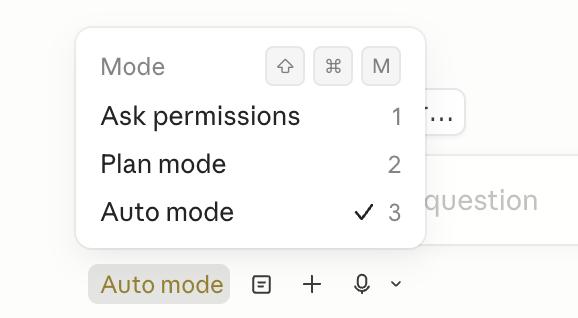
Previously, developers often needed to supervise Claude Code for complex tasks. To simplify this, they could use the dangerously-skip-permissions command to bypass permission confirmations, which is risky. With the launch of Opus 4.7, the Claude Code team found it adept at handling complex and time-consuming tasks, leading to the introduction of automatic mode for better performance.
Once automatic mode is enabled, all permission prompts are redirected to a dedicated classification system that determines which permissions can be safely granted, allowing commands to execute without user intervention. If users clearly state their task requirements in the first conversation, this mode can significantly reduce task execution time, allowing users to address other issues in new sessions.
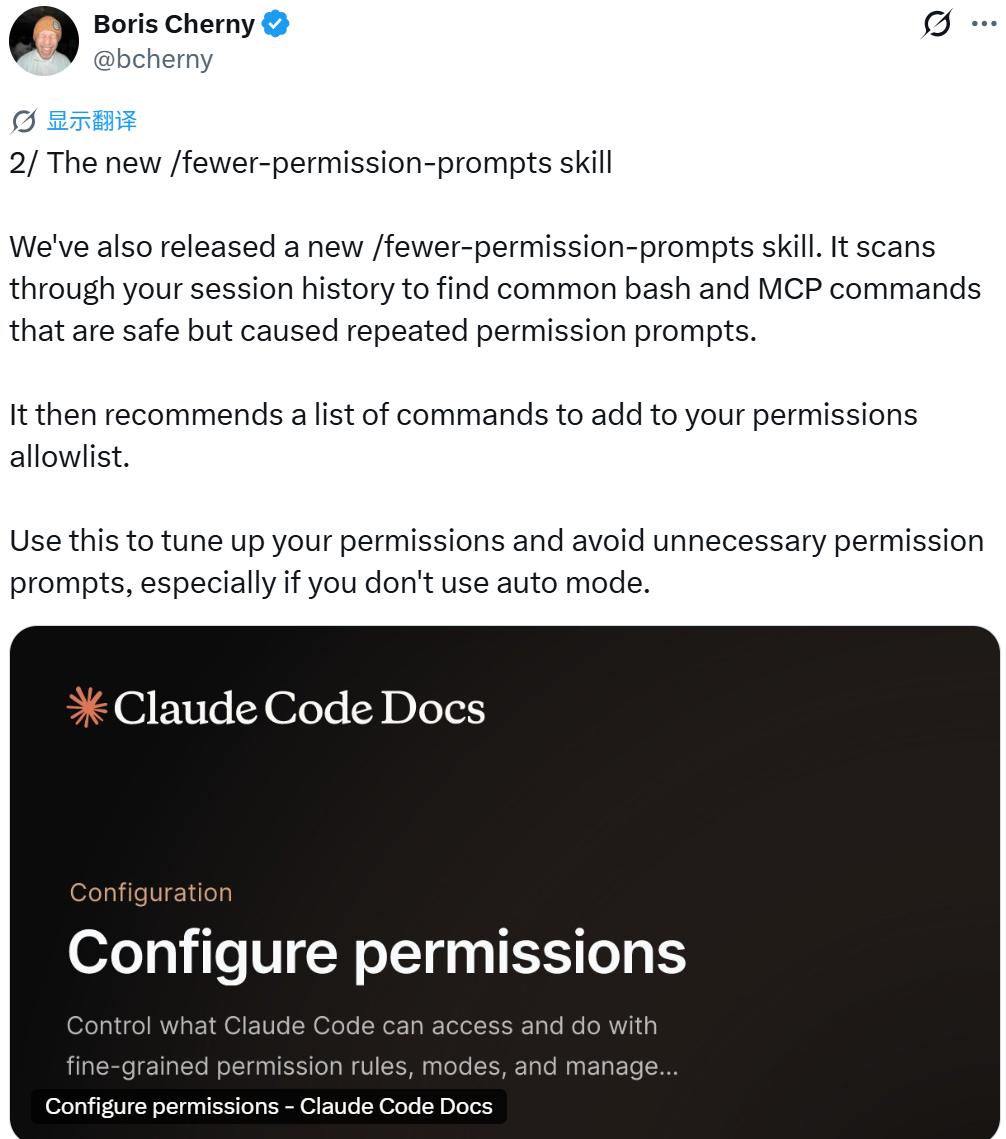
For users concerned about the security of automatic mode, Boris suggested using the /fewer-permission-prompts skill, which reviews history and aggregates frequently occurring permission prompts that are safe to allow without confirmation.
2. Use the Recap Feature for Seamless Work Transition
The Recap feature was launched a few days ago and is specifically designed for Opus 4.7. Since Opus 4.7 excels at handling complex, lengthy tasks, users may find themselves unsure of task progress after taking breaks.
This Recap feature allows users to step away from their screens and provides a summary of previous work and next steps upon return, helping users track task progress and verify direction.
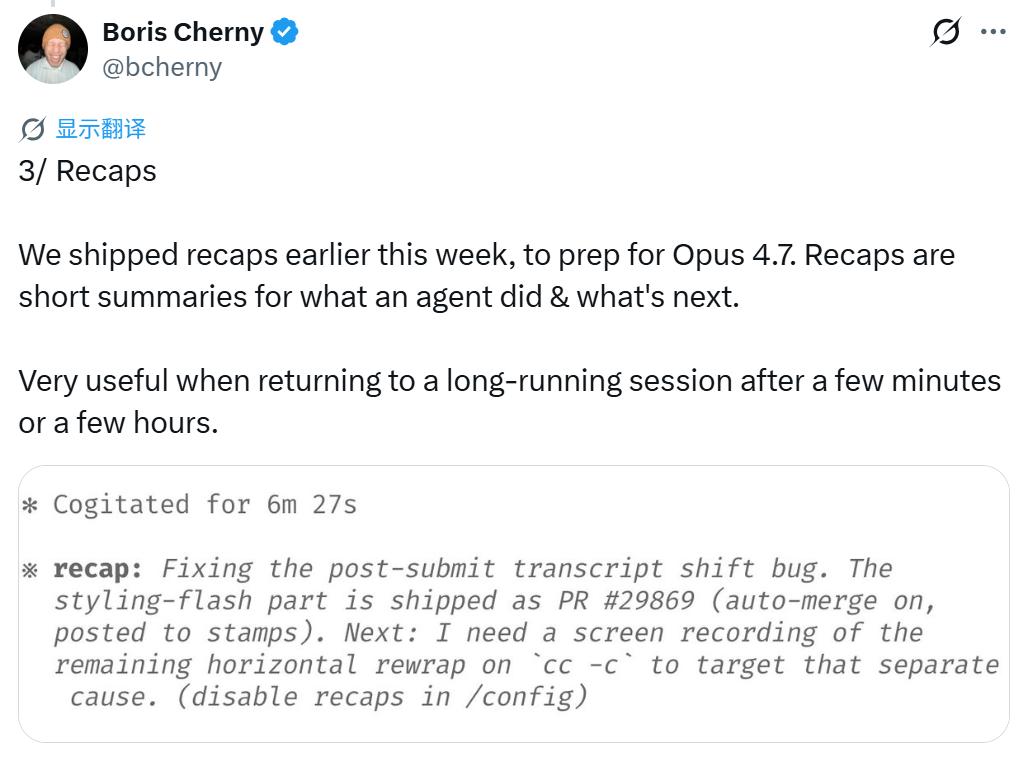
Users can also utilize this feature in complex dialogues to summarize previous execution processes and validate next actions.

3. Set Your Preferred Reasoning Level for Flexible Thinking Speed
Opus 4.7 no longer has a preset thinking scale; it adopts an adaptive thinking mode. The model decides when to engage in deeper thinking based on context, responding quickly to queries and skipping unnecessary thought processes, thus concentrating tokens on more useful tasks.
Users can manually control the speed of thinking. If they want more in-depth analysis, they can prompt: “Please think carefully and analyze step by step before answering; this question is more complex than it seems.” Conversely, to prioritize quick responses, they can prompt: “Prioritize quick responses rather than deep thinking. If in doubt, reply directly.” Reducing thought can save tokens but may affect accuracy, so it should be used cautiously for complex tasks.
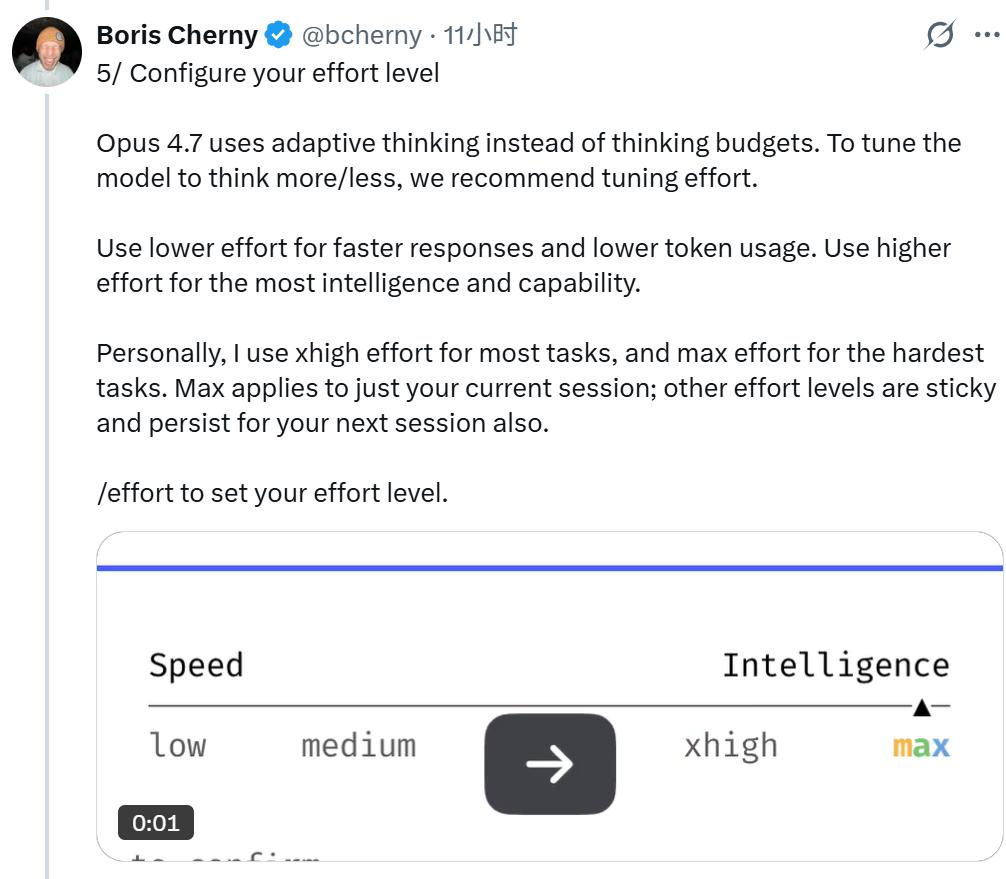
Users can also adjust the reasoning level to change the depth of thought. Opus 4.7 categorizes reasoning levels into five tiers, introducing an xhigh (extra high) level as the default.
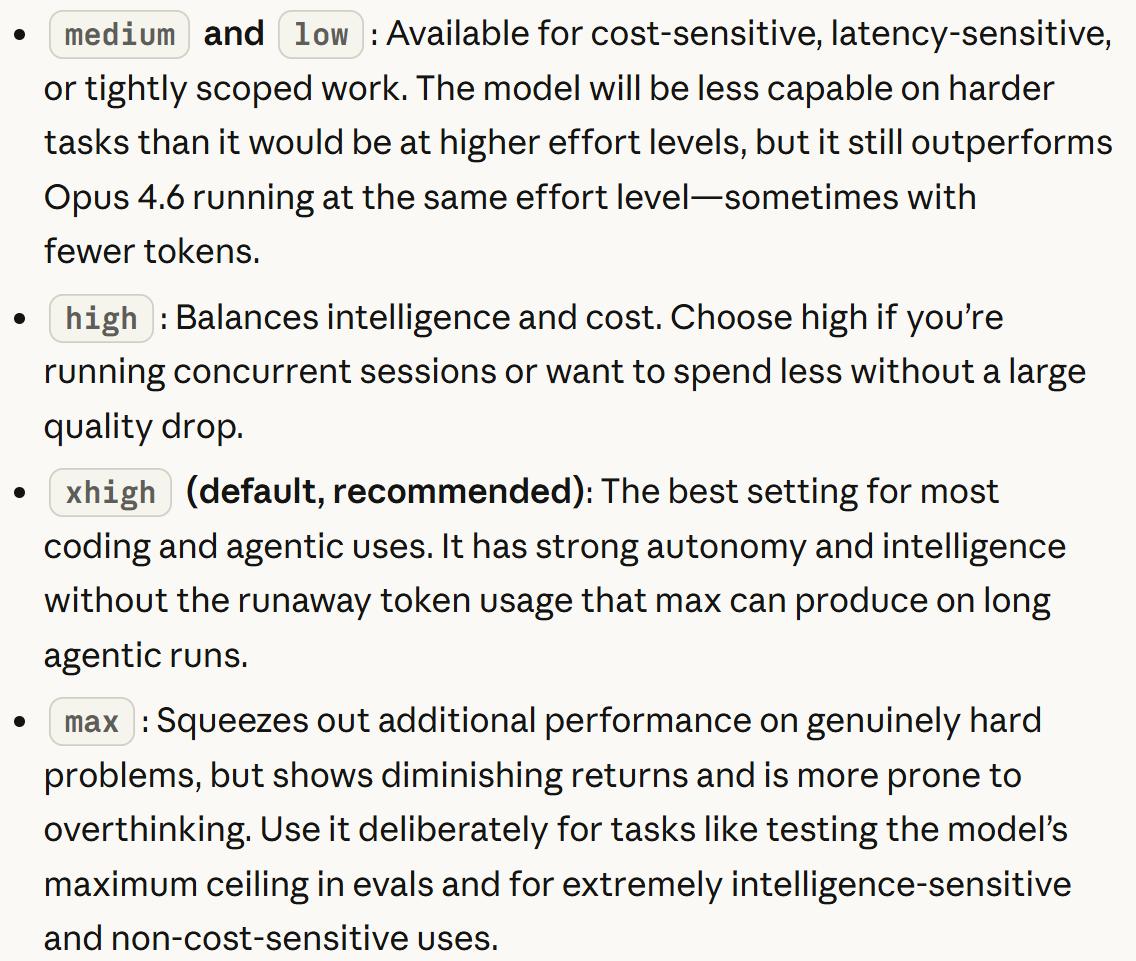
The xhigh level balances complex task handling, reasoning ability, and token consumption. Boris mentioned he typically uses the xhigh level and only switches to max for extremely complex tasks, which only applies to the current session, reverting to the default level in new sessions to avoid excessive token consumption.
4. Provide Verification Methods and Monitor Claude’s Results
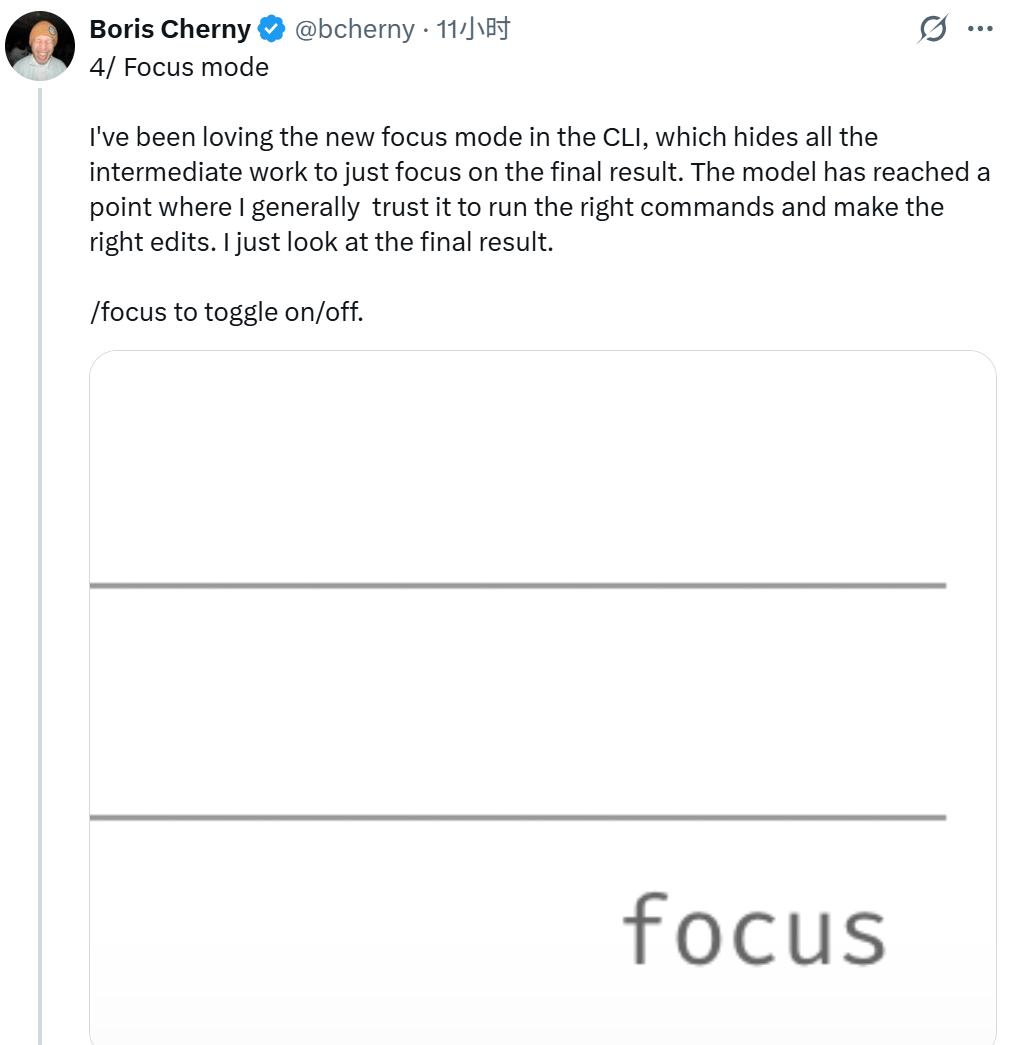
Boris has great trust in Opus 4.7, believing it can execute commands and make correct modifications. Users only need to check if the final results meet their requirements, leading to the introduction of a focused mode on the CLI page.
In this mode, all intermediate steps are hidden, allowing users to focus solely on the results. However, if users do not have sufficient trust in Opus 4.7, it is not recommended to enable this mode.
To ensure result quality, Boris suggests giving Claude a way to verify its work results.
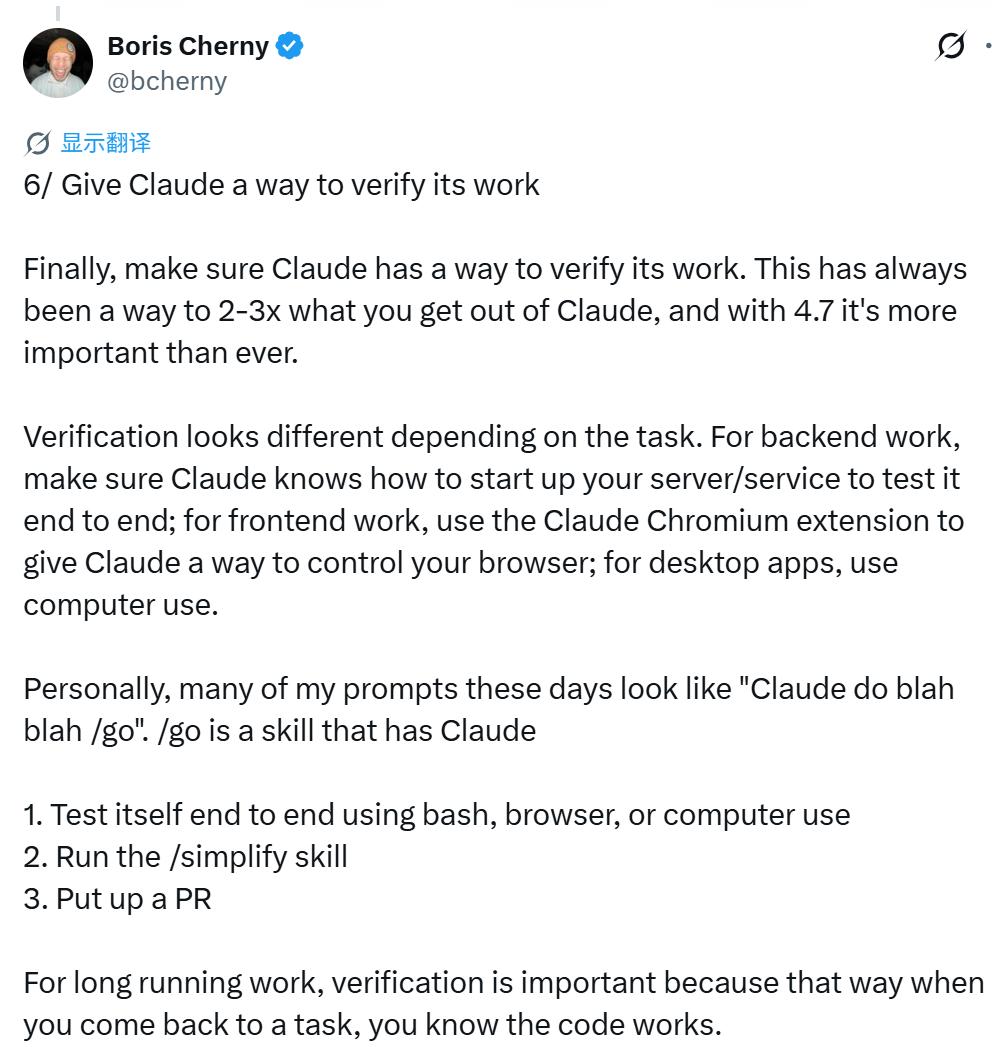
Boris believes this can improve efficiency by 2 to 3 times, which is especially important for Opus 4.7. He also recommends suitable verification methods for different tasks, such as enabling server testing for backend development and teaching Claude to control browsers for frontend tasks.
Conclusion: A Stronger Model Requires Advanced Usage Techniques
Transitioning from “feeding instructions one by one” to “confidently delegating tasks” and from “watching step by step” to “hiding the process entirely,” Boris’s usage tips stem from confidence in Opus 4.7’s powerful capabilities.
According to data released by Anthropic, the Opus 4.7 model shows solid improvements across multiple benchmark tests. A smarter model requires more powerful tools and advanced usage techniques to fully unleash its potential.
Comments
Discussion is powered by Giscus (GitHub Discussions). Add
repo,repoID,category, andcategoryIDunder[params.comments.giscus]inhugo.tomlusing the values from the Giscus setup tool.